About Me

Hi! I'm

I build digital worlds with the logic of mathematics and the soul of creativity. Each project is a journey between innovation and perfection.

I have always been in love with technology. I started as a kid experimenting with keyboards and games, then moved into building Minecraft servers with custom game modes. That early curiosity became a professional path: today I design and ship full-stack products where interface quality, backend reliability, and real business workflows must work together.

I write software like an architect and a storyteller at once: stable foundations, clear systems, and interfaces that feel alive. From AI-powered dashboards to scalable operations platforms, I translate complex technical realities into experiences people can trust, use, and remember. I am actively looking for challenging software engineering opportunities that combine technical growth, meaningful impact, and long-term professional development.

React / Next.jsPostgreSQL / PrismaTailwind / Shadcn UICapacitorJS
View CV
My Development Philosophy

For me, development is not just writing code: it is a continuous process of learning, improvement, and responsibility. Every project is an opportunity to grow, overcome real challenges, and build solutions that have a positive impact on people's lives.

I believe the key to being a strong developer is curiosity: the drive to understand things deeply, keep learning continuously, and adapt to technological change without losing design clarity.

My approach combines technical rigor and collaboration: understanding user needs, working effectively with the team, and translating complexity into experiences that are simple, reliable, and useful.

AI, Ethics, and Growth

I see AI as a major opportunity to improve both life and work. I use it to accelerate my learning and expand my skills, always with attention to ethical and social implications. To me, AI is a powerful tool: it should be used consciously, responsibly, and with real-world positive impact in mind.
Some Numbers

Snapshot of delivery scale and experience.

7+Companies
4Years of Experience
3Active Main Projects
Featured Projects

Click a card to open full project details.

Portfolio

Case studies and product screens

Selected product work across hospitality, vehicle management, discovery flows, and diving-center operations.

Web apps, dashboards, product systems
Download portfolio
Landing
Face B&B Landing screenshot
Screen 1Public

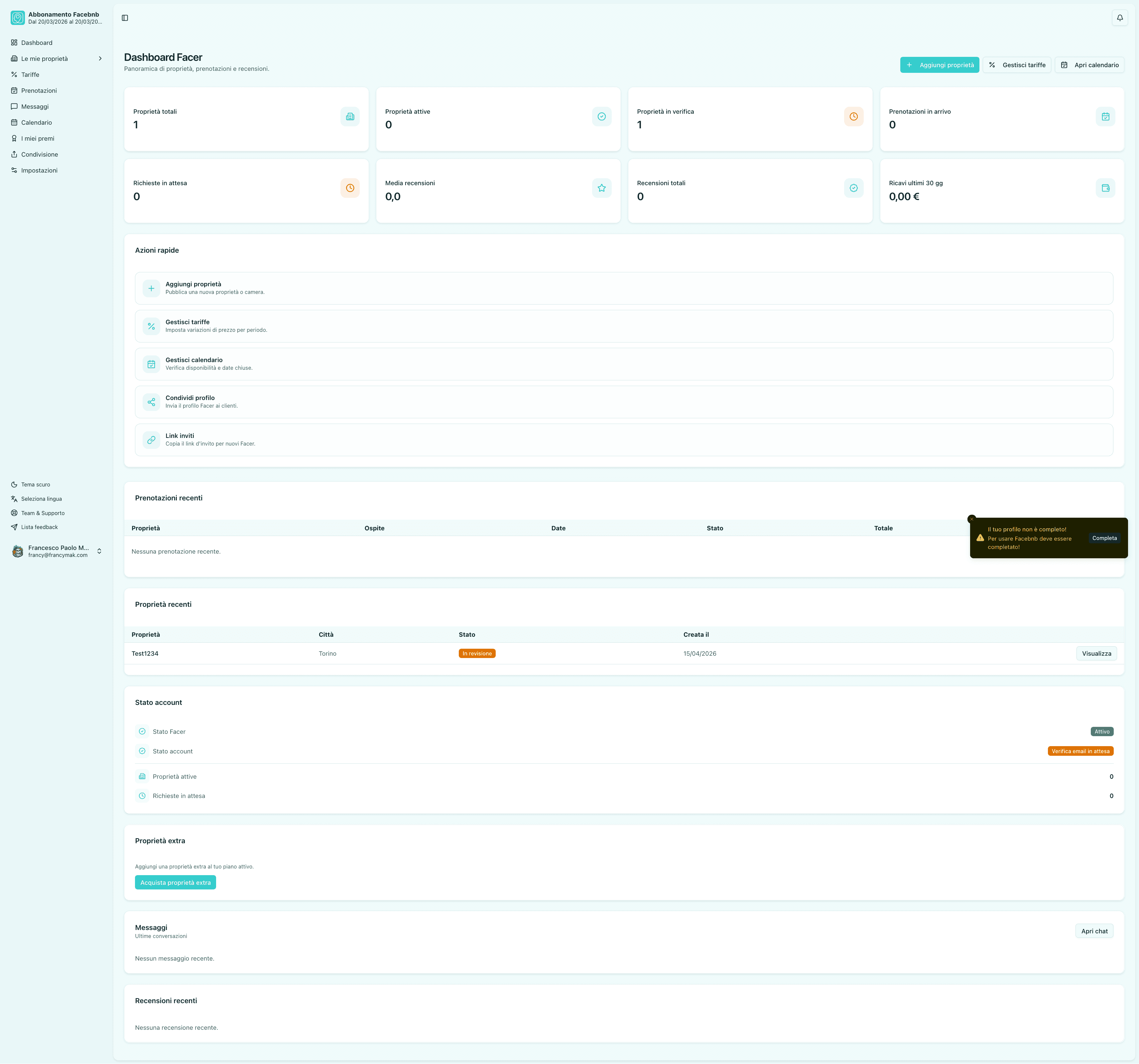
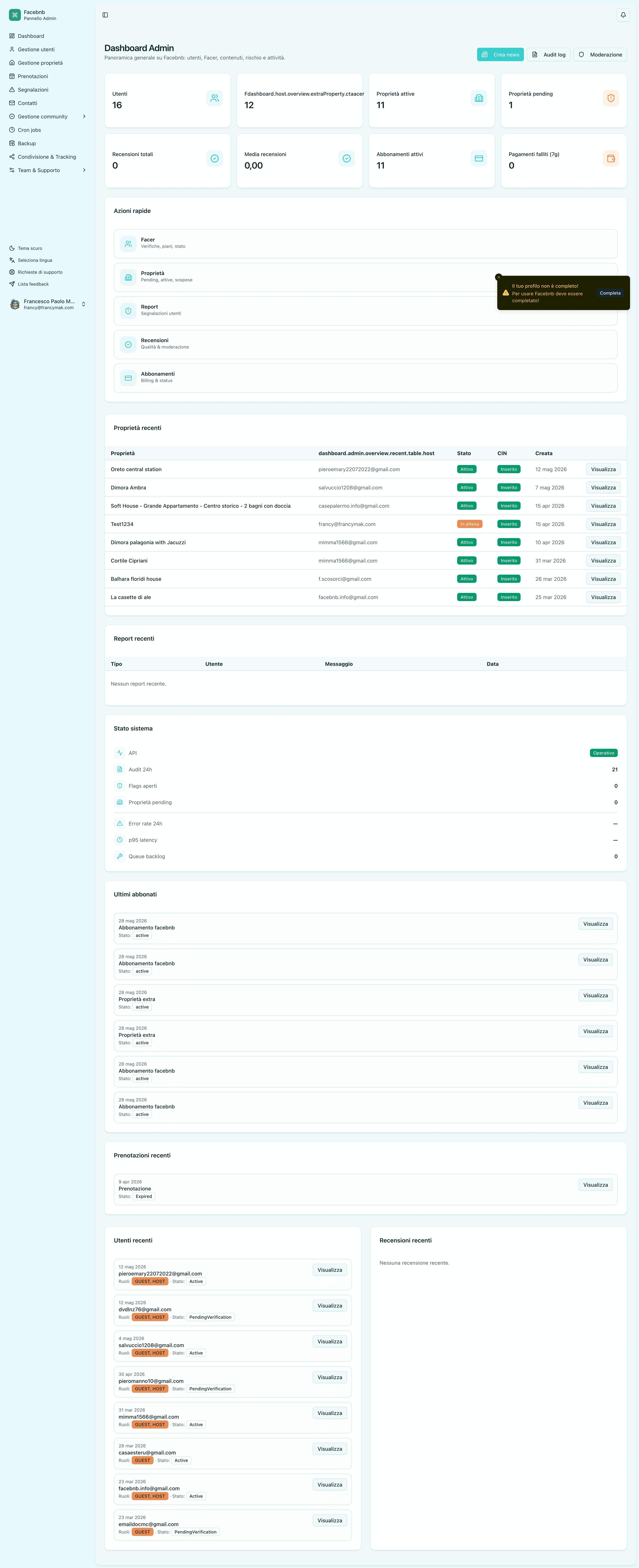
Admin overview with KPI cards, tasks, requests, payment state and listing management areas.

Why: I kept operational signals grouped on one screen so a host/admin can understand what needs attention before opening deeper flows.

Search
Face B&B Search screenshot
Screen 2Filters

Long property-editing form with structured fields, amenities, pricing sections and media/listing configuration.

Why: I separated data into predictable blocks because accommodation publishing has many required details and operators need confidence before going live.

Listing
Face B&B Listing screenshot
Screen 3Host

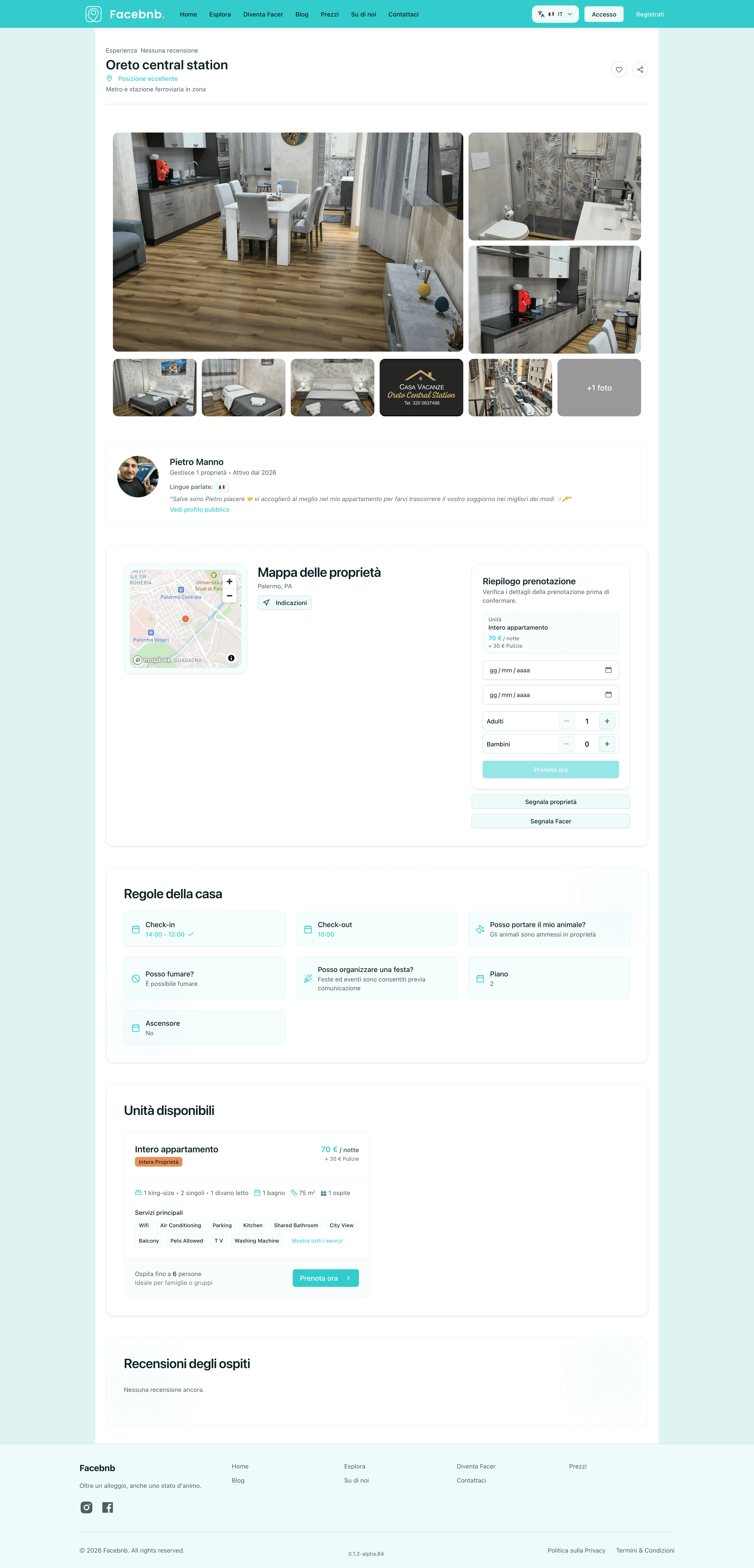
Public listing page with gallery, host profile, booking panel, location map, services and reviews.

Why: I designed it to answer trust questions in order: what the place looks like, who hosts it, where it is, what is included and what others say.

Details
Face B&B Details screenshot
Screen 4Booking

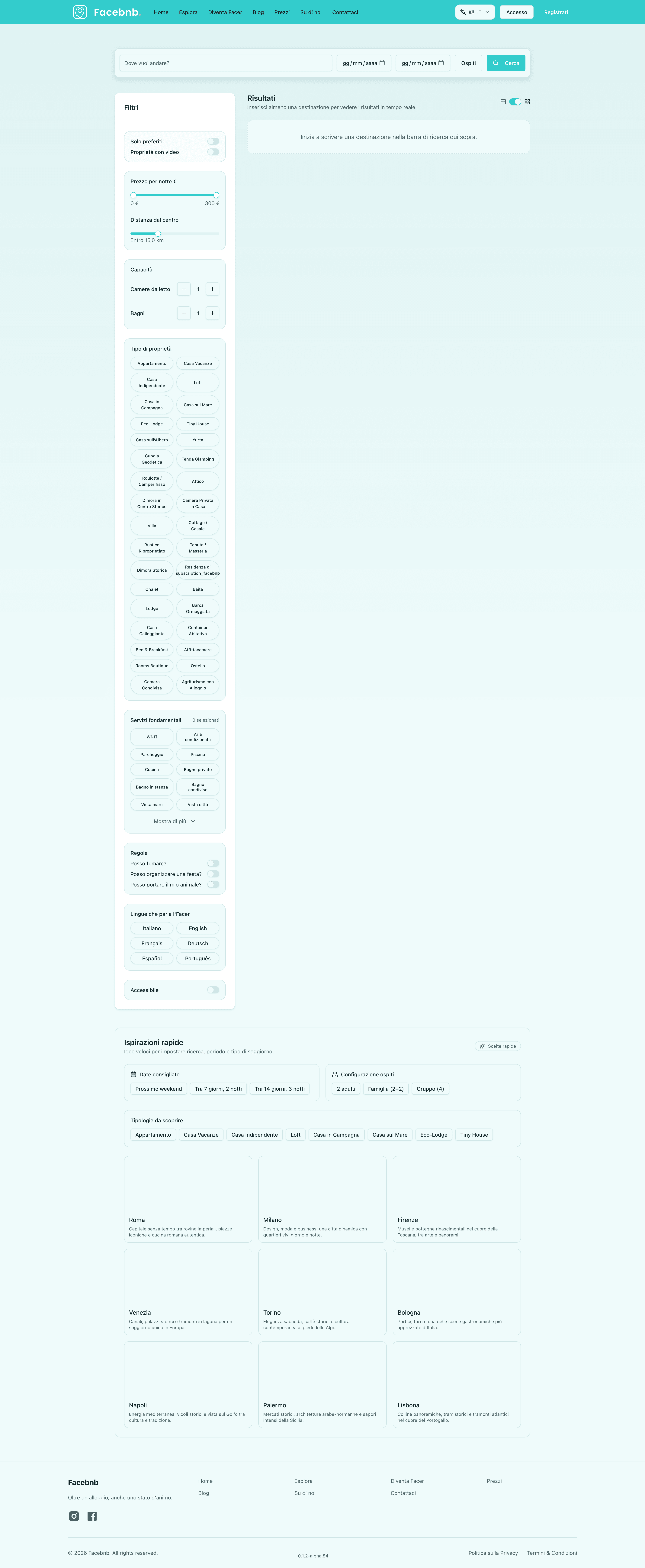
Search/filter experience with a vertical filter rail, detailed constraints and result area.

Why: I made filters persistent because travel discovery depends on quick comparison without losing the current result context.

Admin
Face B&B Admin screenshot
Screen 5Badges

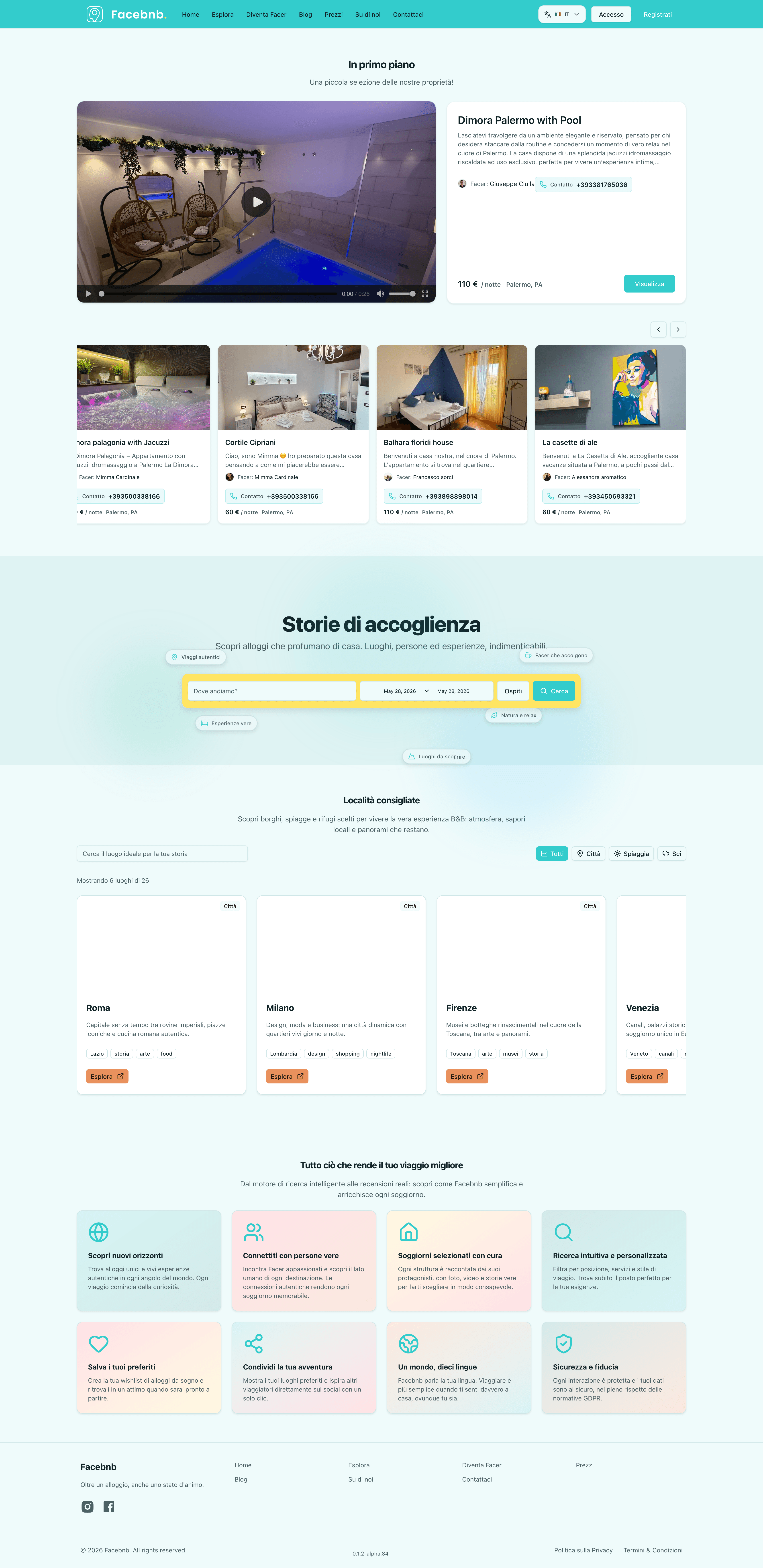
Marketing/home flow with hero, property cards, hosting story, discovery sections and trust blocks.

Why: I used an editorial structure to make the product feel warmer than a standard OTA while still keeping clear conversion points.

Flow
Face B&B Flow screenshot
Screen 6Growth

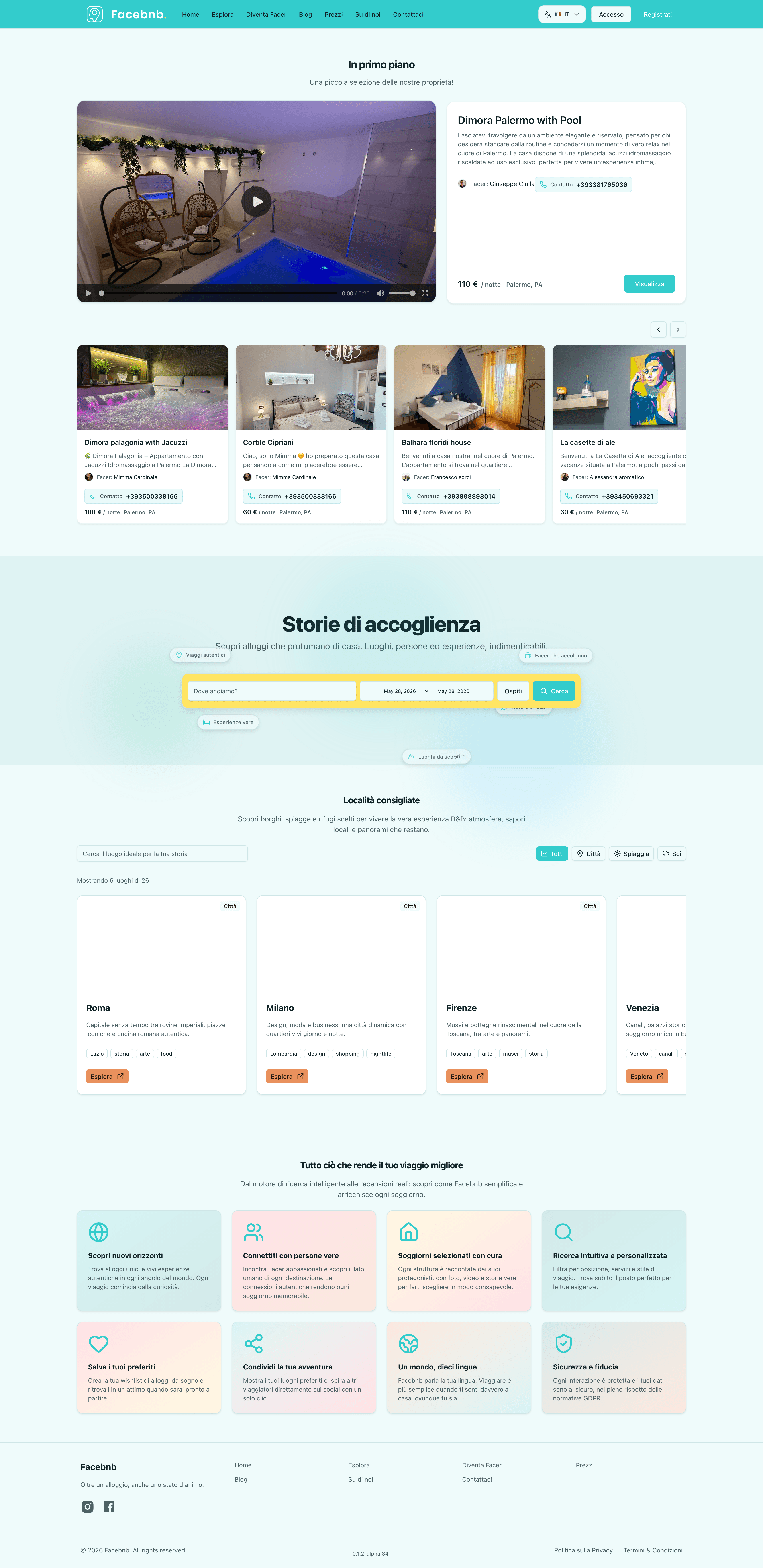
Alternative landing state focused on destination discovery, property cards and repeated conversion sections.

Why: I repeated the core CTA pattern across the page to keep discovery and host acquisition visible even after scrolling.

My Properties
Face B&B My Properties screenshot
Screen 7Host

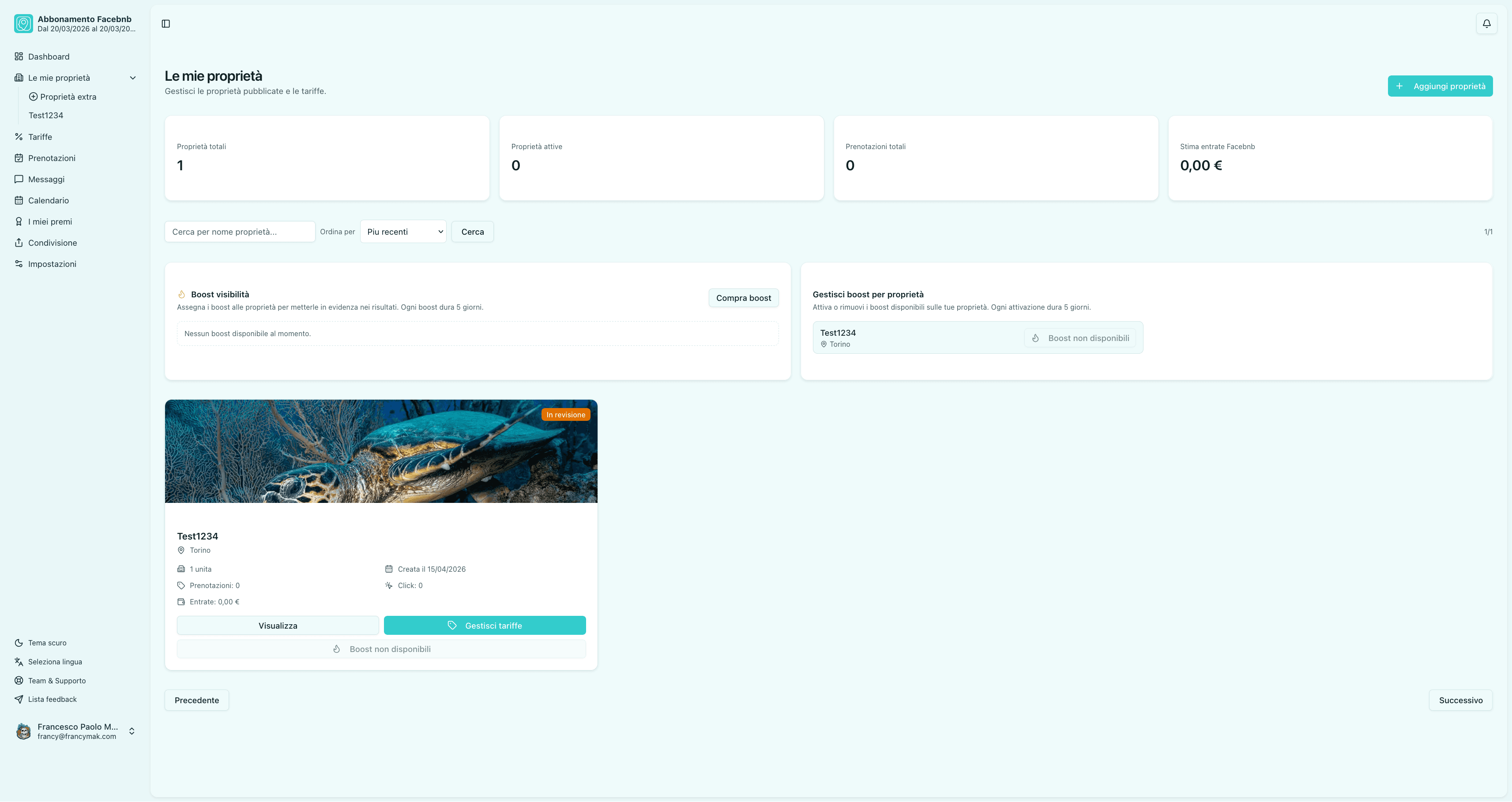
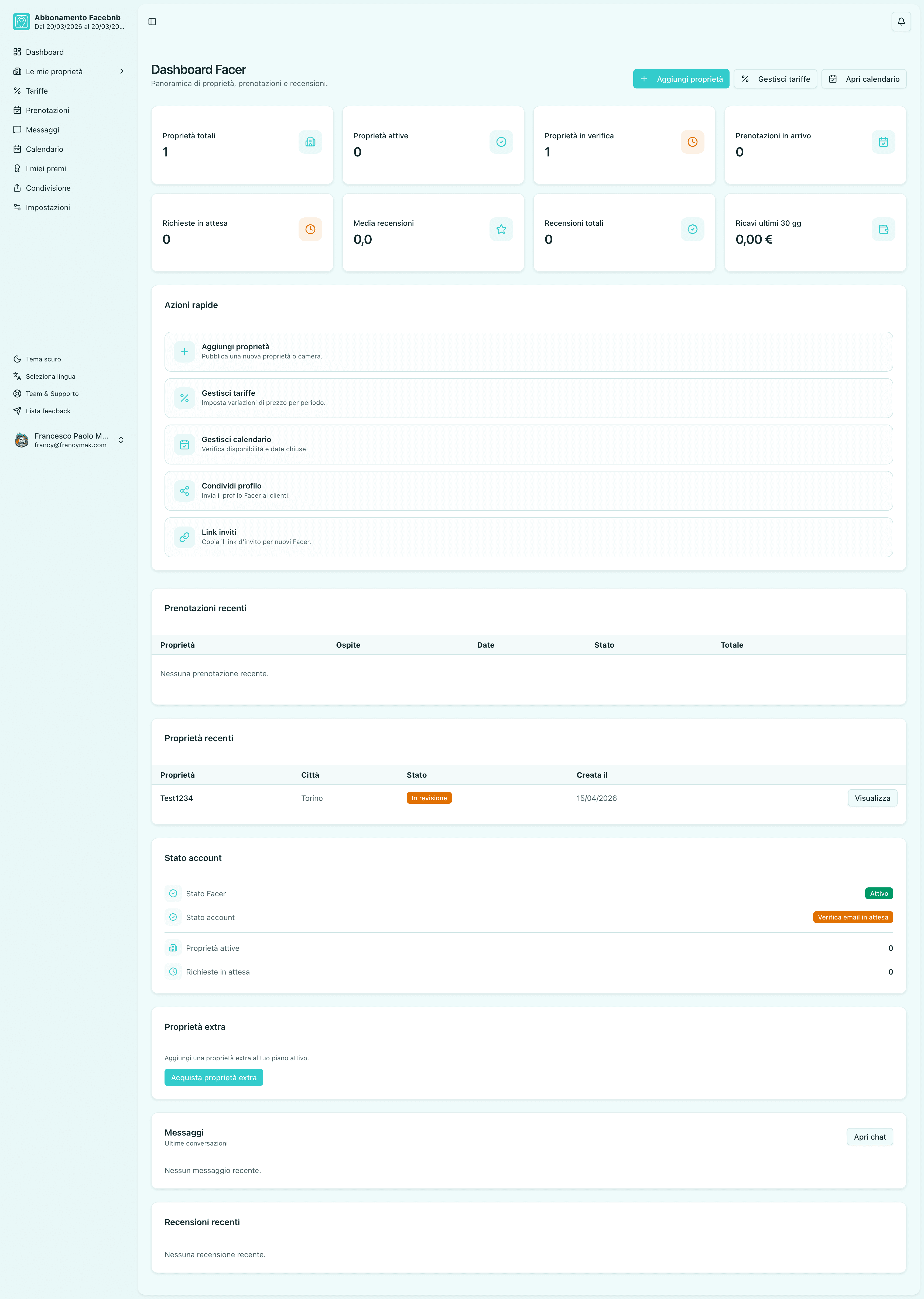
Host property-management screen with KPI cards, payment/action blocks and a property card.

Why: I kept the active property visible in the same workspace as the operational counters so hosts can understand listing state quickly.

Admin Overview
Face B&B Admin Overview screenshot
Screen 8Ops

Light-theme Face B&B admin dashboard with KPI cards, pending actions, payment blocks and task sections.

Why: I used a light administrative layout to make long operational pages calmer and easier to scan during daily host management.

Customer Form
Face B&B Customer Form screenshot
Screen 9Booking

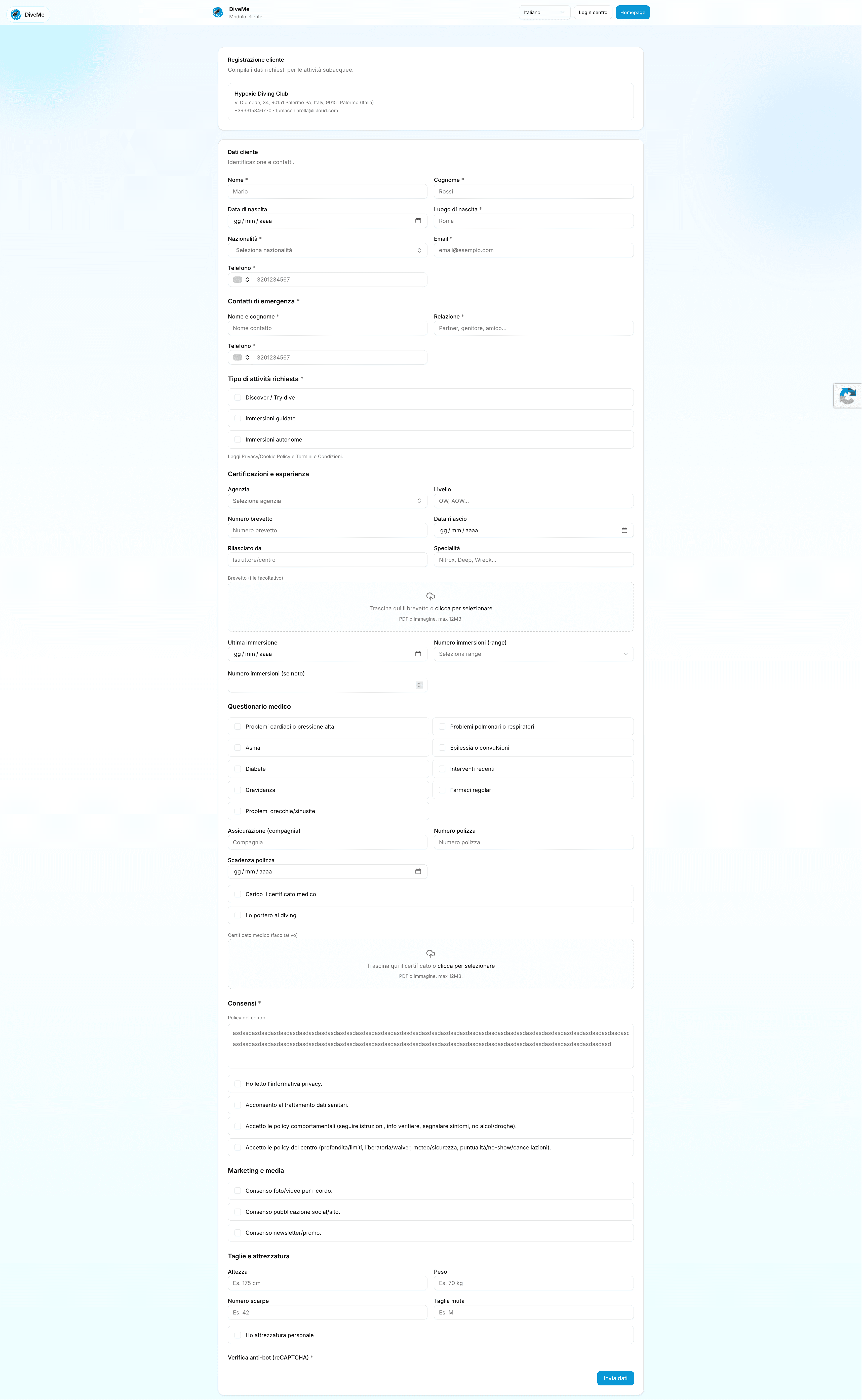
Light customer-facing booking/request form with long structured personal, stay and consent sections.

Why: I used a clean light layout because external users need readability, trust and clear section separation when completing long forms.

Overview
MakkVMS Overview screenshot
Screen 1Ops

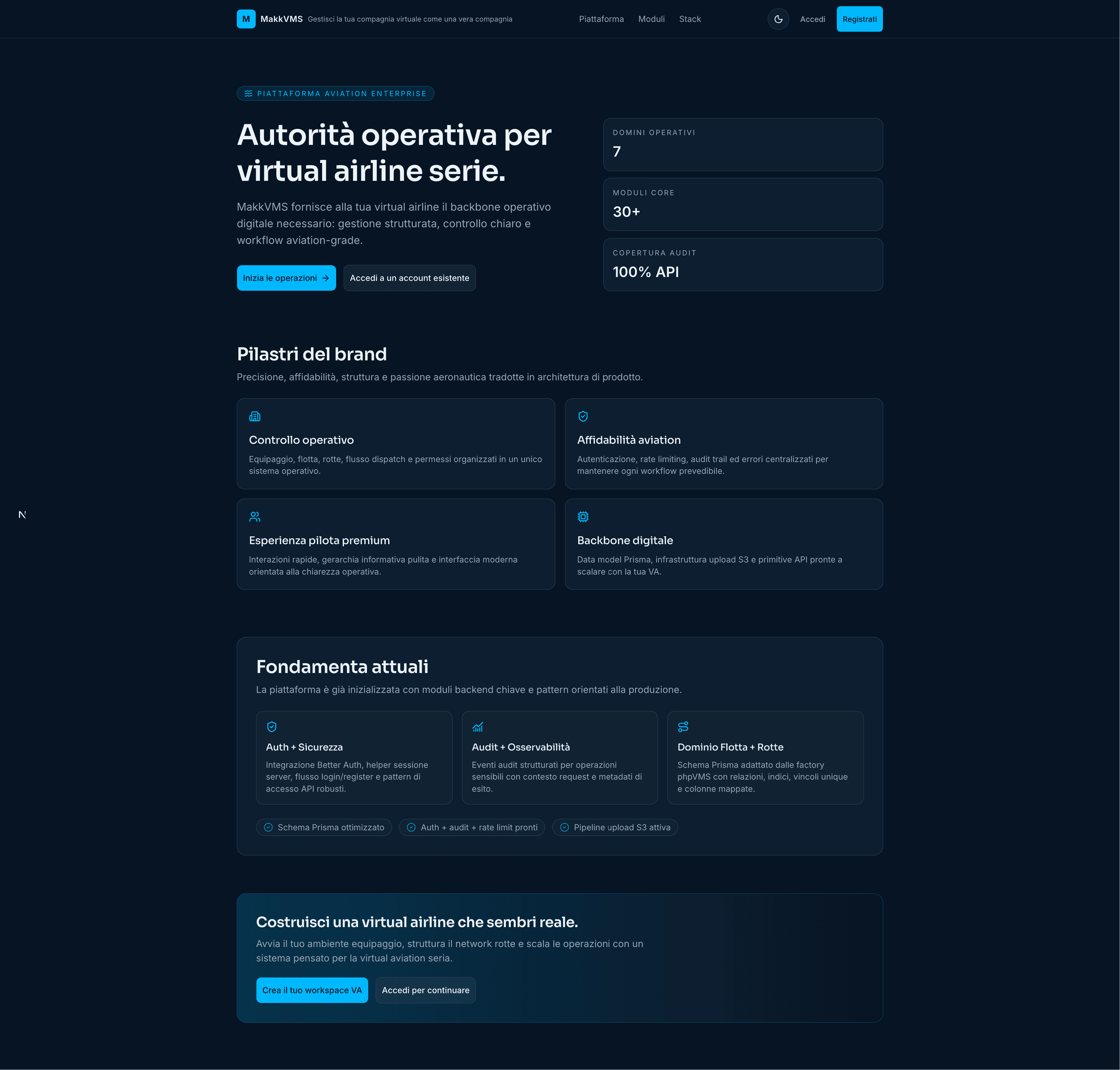
Public positioning page presenting the platform as an authority layer for virtual airlines.

Why: I opened with value, proof cards and current foundations to explain the product before asking users to sign in or create a virtual company.

Dashboard
MakkVMS Dashboard screenshot
Screen 2Fleet

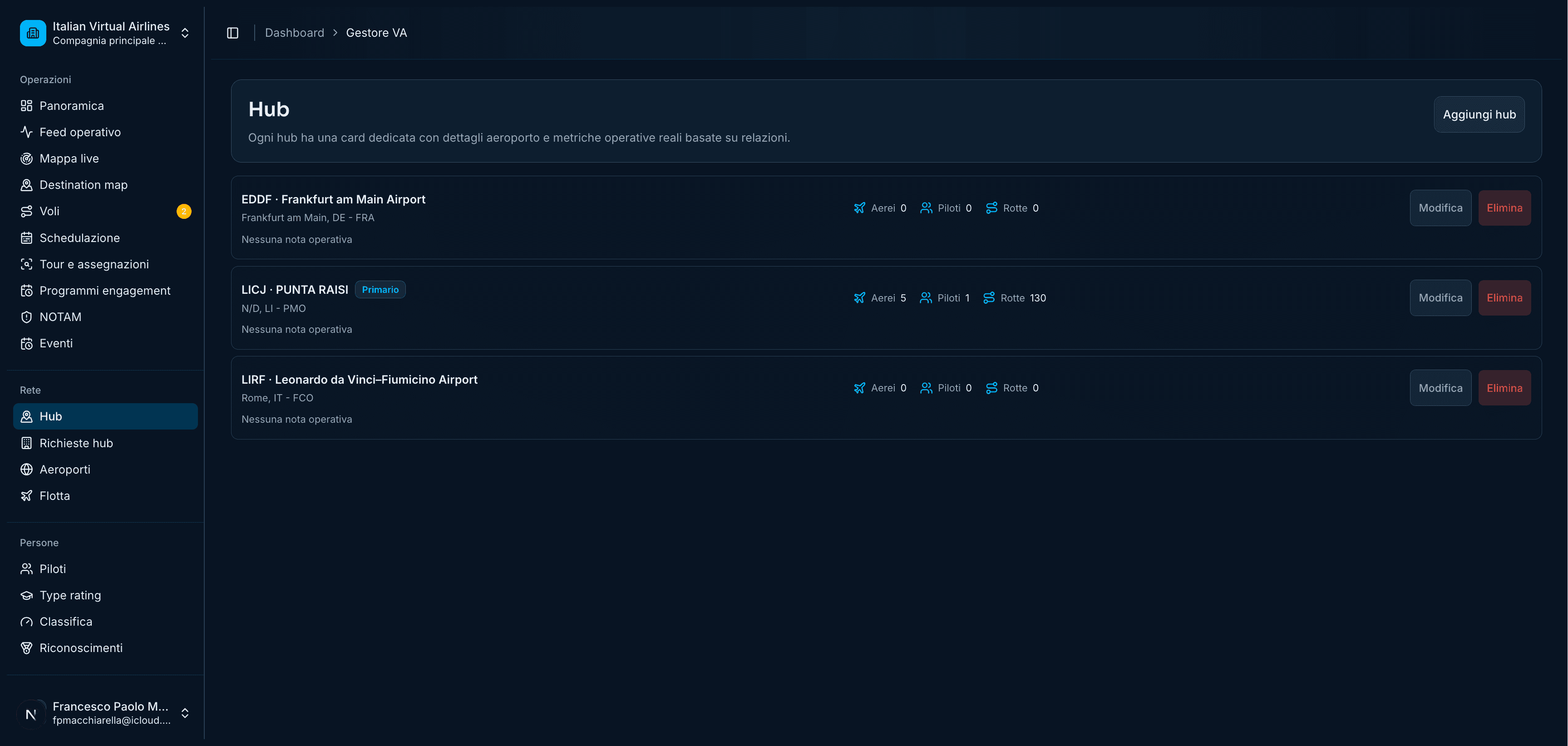
Hub management screen listing airports/bases with quick actions for edit and removal.

Why: I used a compact table-list pattern because fleet or hub administration needs fast scanning and low-friction maintenance.

Records
MakkVMS Records screenshot
Screen 3Data

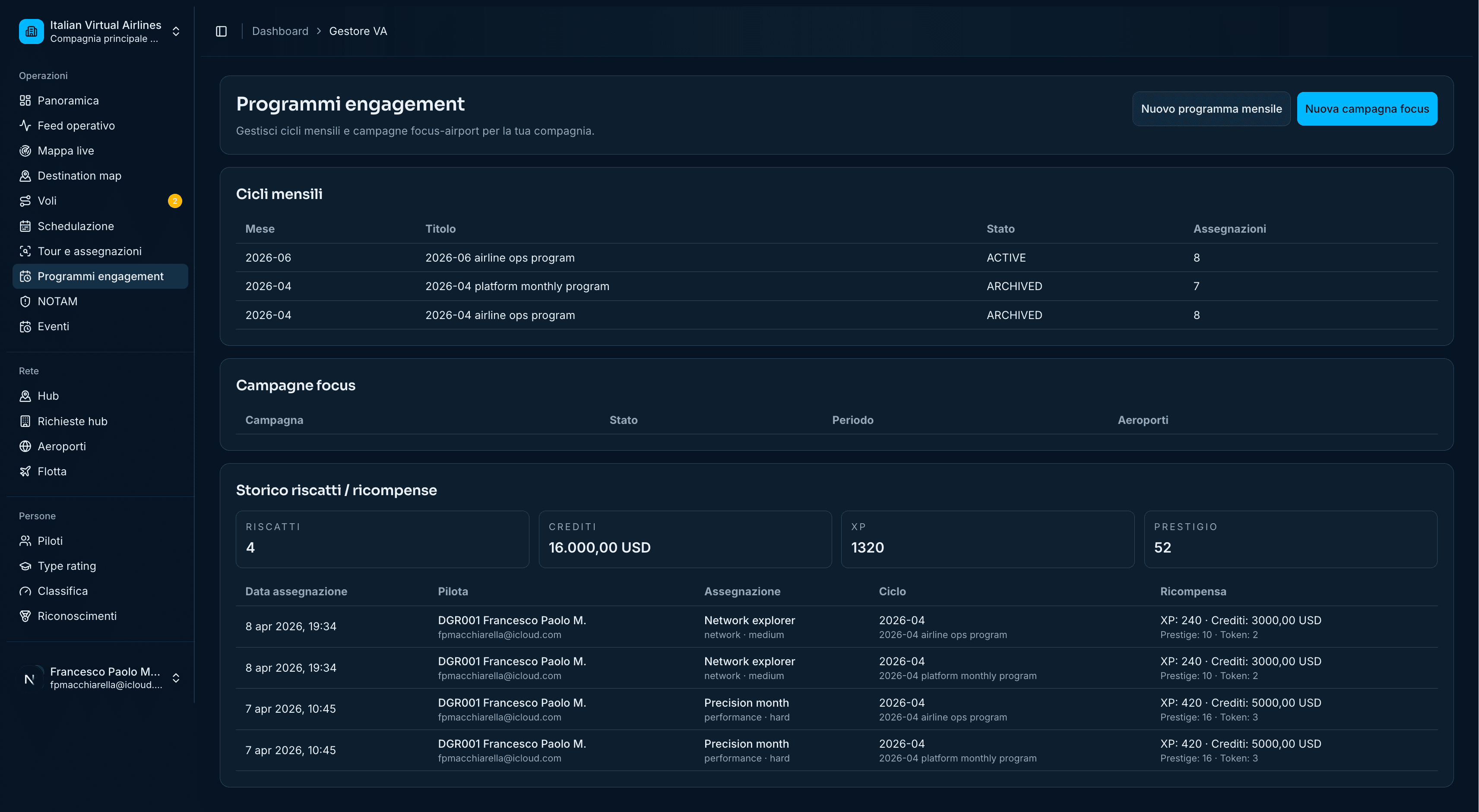
Engagement-program dashboard with active programs, campaign focus and reward history.

Why: I grouped activity, rewards and program state to make incentive systems measurable instead of hidden in separate pages.

Detail
MakkVMS Detail screenshot
Screen 4Manage

Flight/program list with filters, status chips and dense operational rows.

Why: I prioritized data density because this type of admin surface is used repeatedly by operators who need comparison more than decoration.

Tables
MakkVMS Tables screenshot
Screen 5Admin

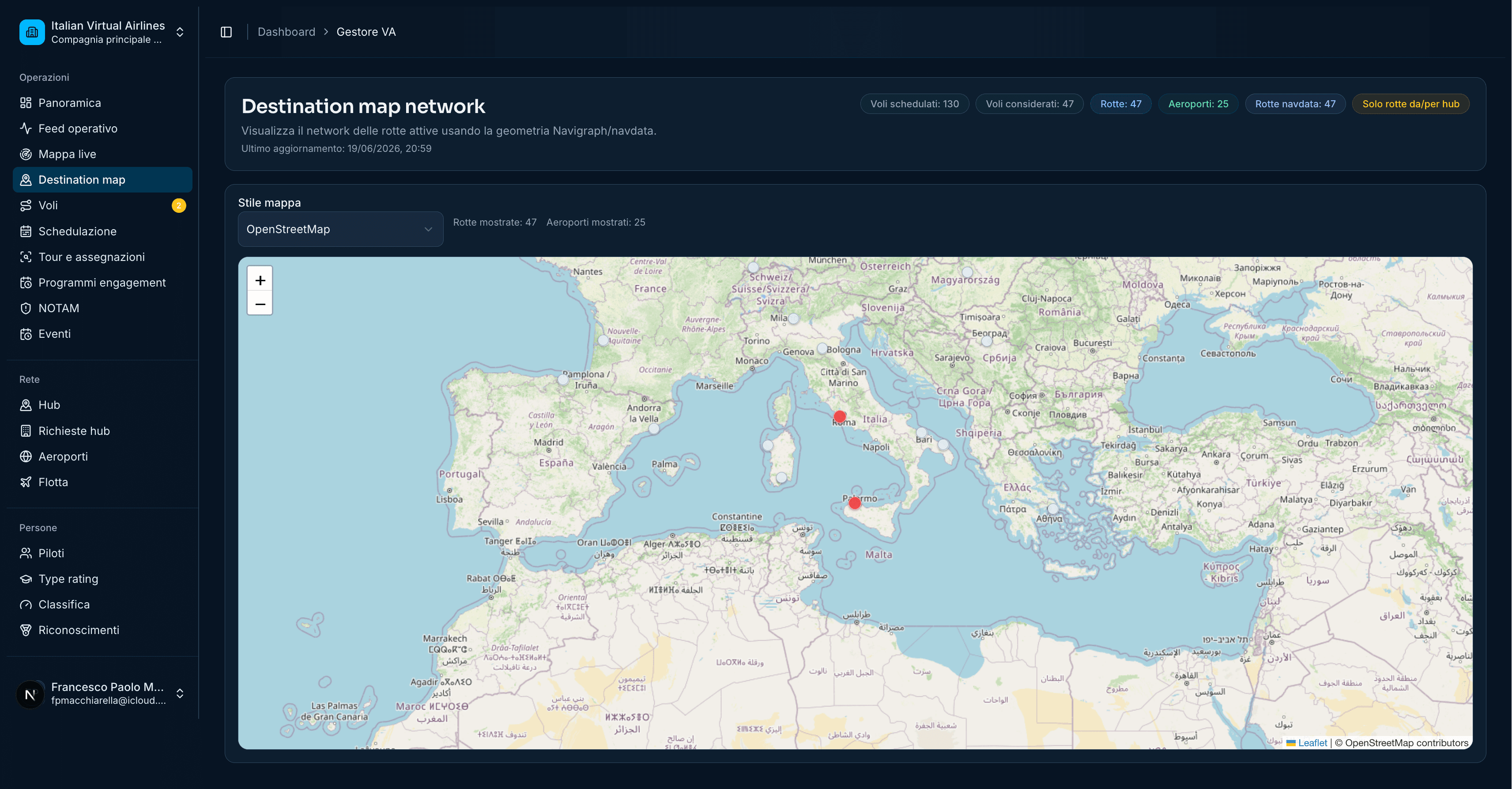
Map-based destination network view showing geographic distribution of active points.

Why: I used a map because route networks are spatial; operators can understand coverage faster than reading a long table.

Forms
MakkVMS Forms screenshot
Screen 6Input

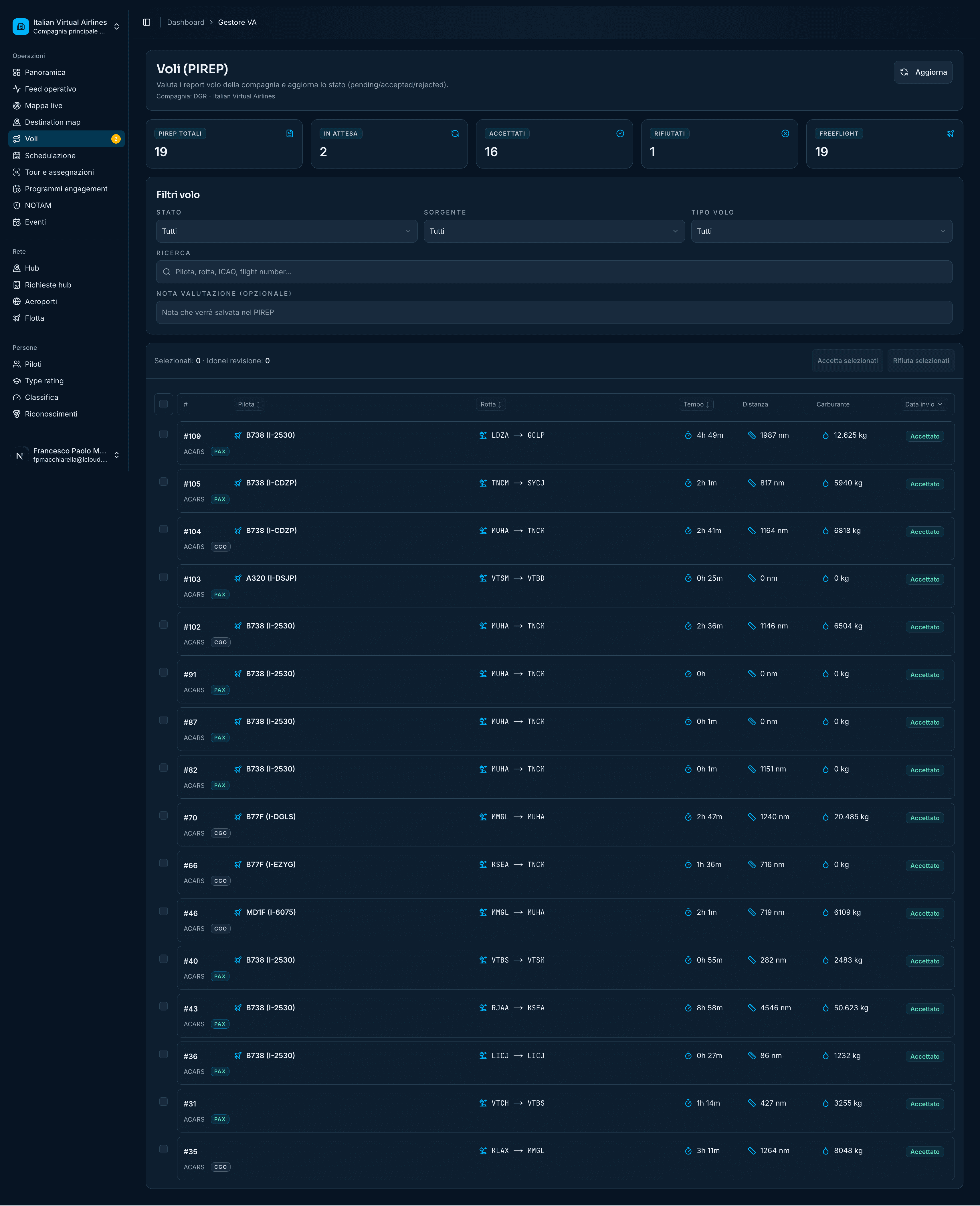
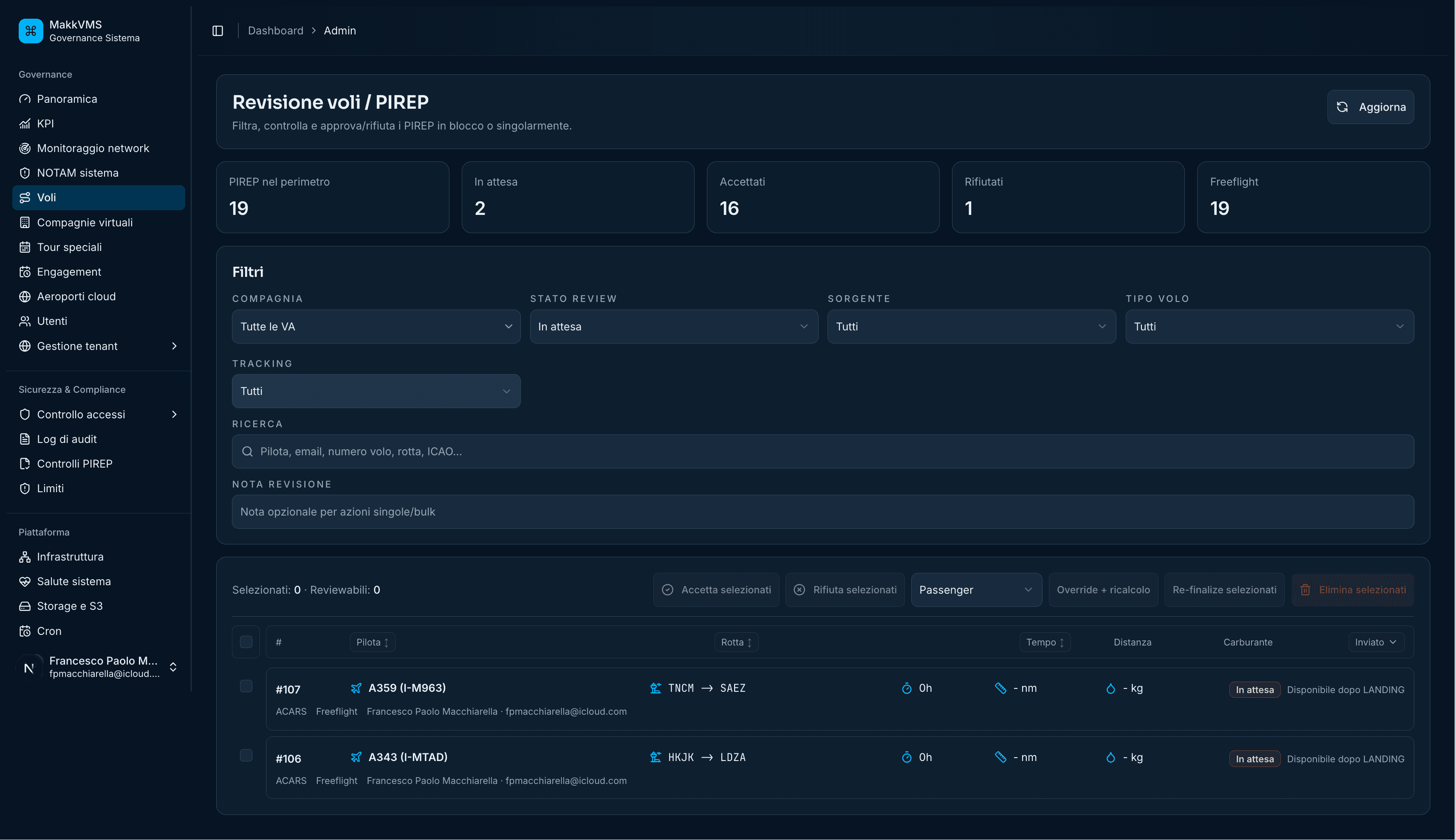
PIREP/revision interface with counters, filters, review form and rows of submitted reports.

Why: I made the review state visible at the top so moderators can assess workload before handling individual submissions.

Reports
MakkVMS Reports screenshot
Screen 7Track

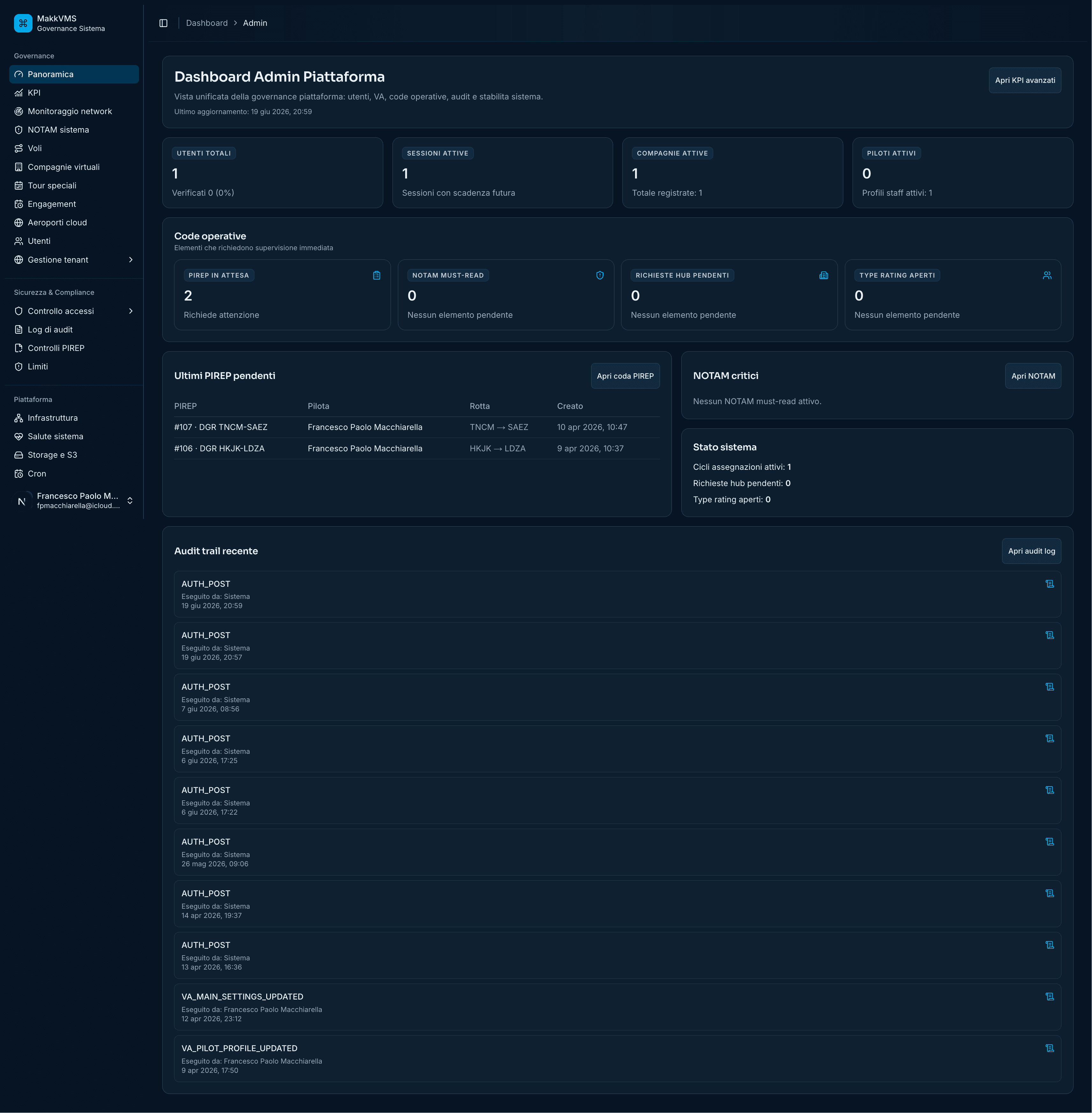
Admin platform dashboard with KPI cards, airline list, activity feed and operational summaries.

Why: I combined metrics and recent activity so administrators can monitor health and detect issues without opening every module.

Control
MakkVMS Control screenshot
Screen 8Status

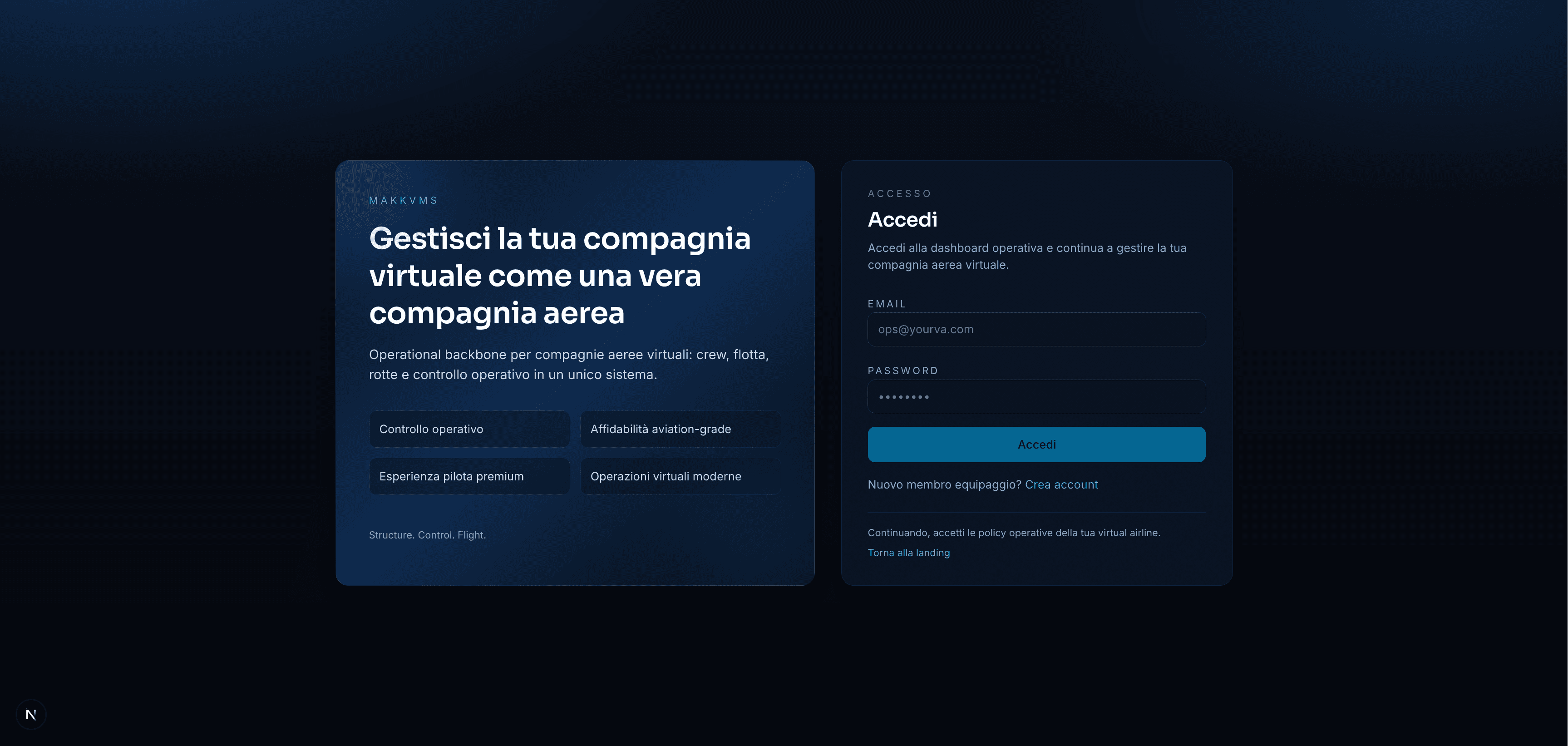
Login screen with product explanation and focused authentication panel.

Why: I split message and form so new users understand the platform context while returning users can authenticate quickly.

Operations Dashboard
MakkVMS Operations Dashboard screenshot
Screen 9Monitor

Dark operational dashboard with summary counters, table sections and right-side monitoring widgets.

Why: I arranged secondary widgets on the side so the main operational table remains the primary work area while context stays visible.

Home
Experifind Home screenshot
Screen 1Discover

Host dashboard with performance cards, reservation table, quick widgets and payment-related summaries.

Why: I used a dashboard-first entry because operators need immediate status and revenue context before managing individual listings.

Flow
Experifind Flow screenshot
Screen 2Convert

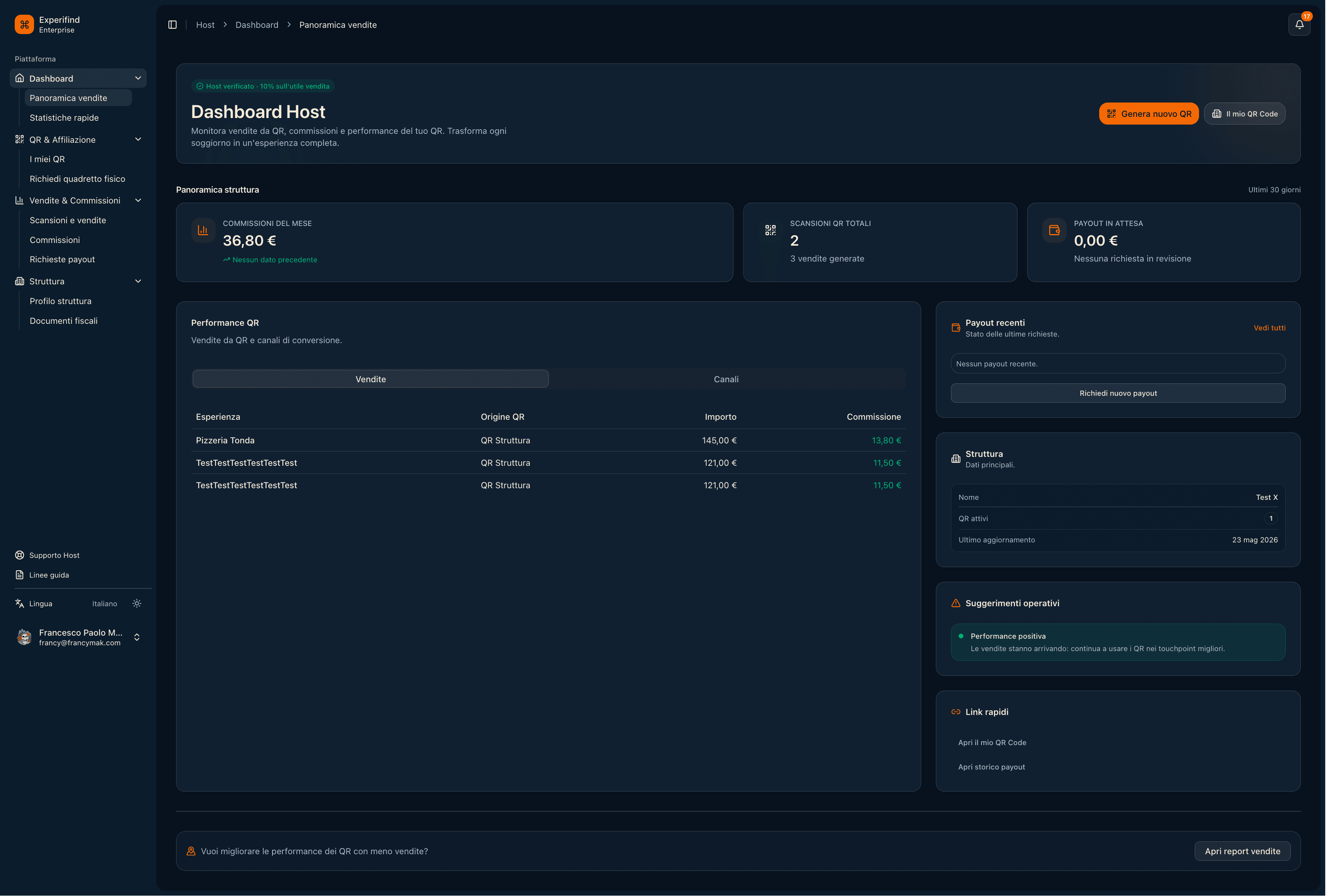
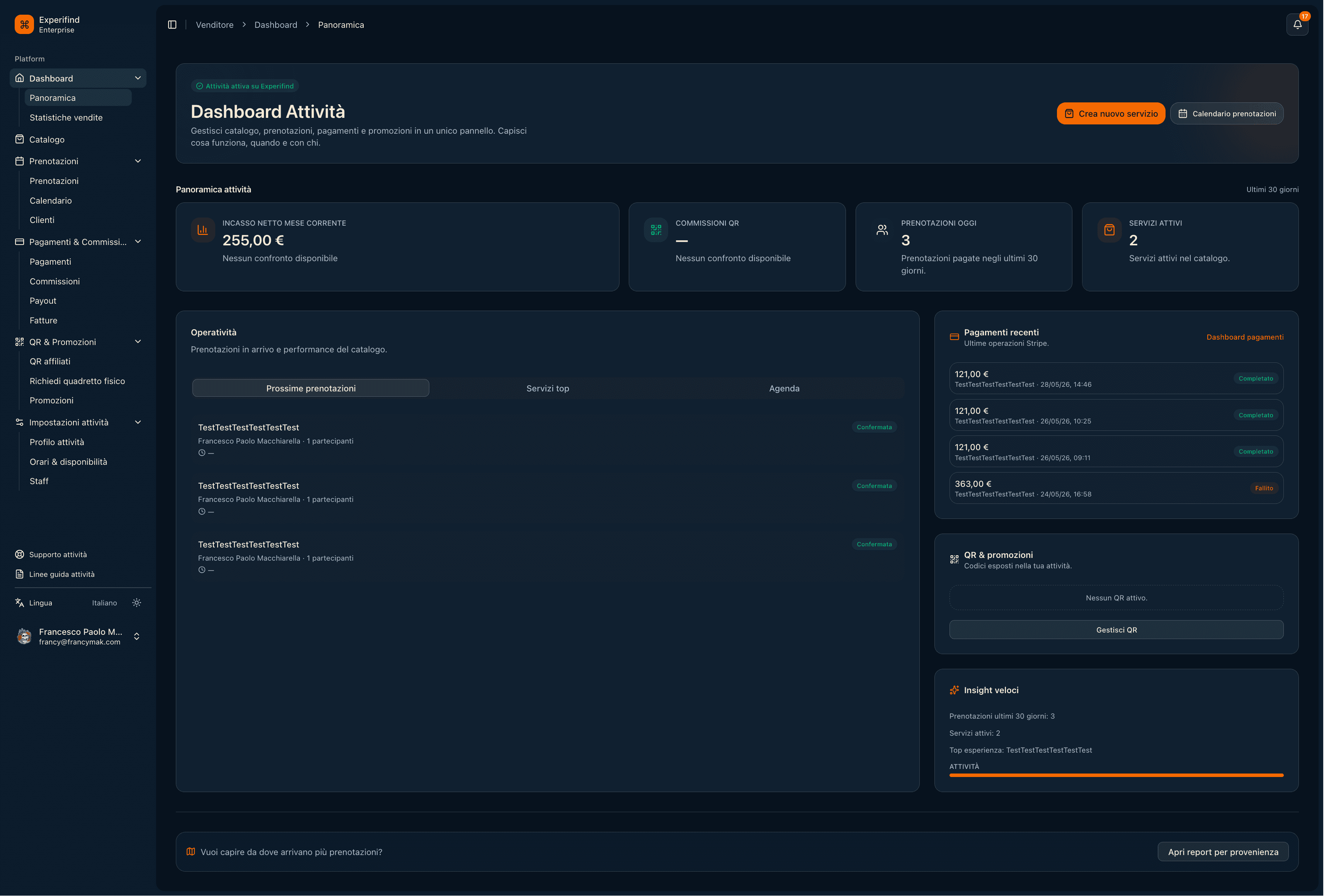
Activity dashboard with revenue, reservation counters, recent items and task widgets.

Why: I placed financial and operational activity together because conversion-oriented products need both business and workflow visibility.

Mobile
Experifind Mobile screenshot
Screen 3UX

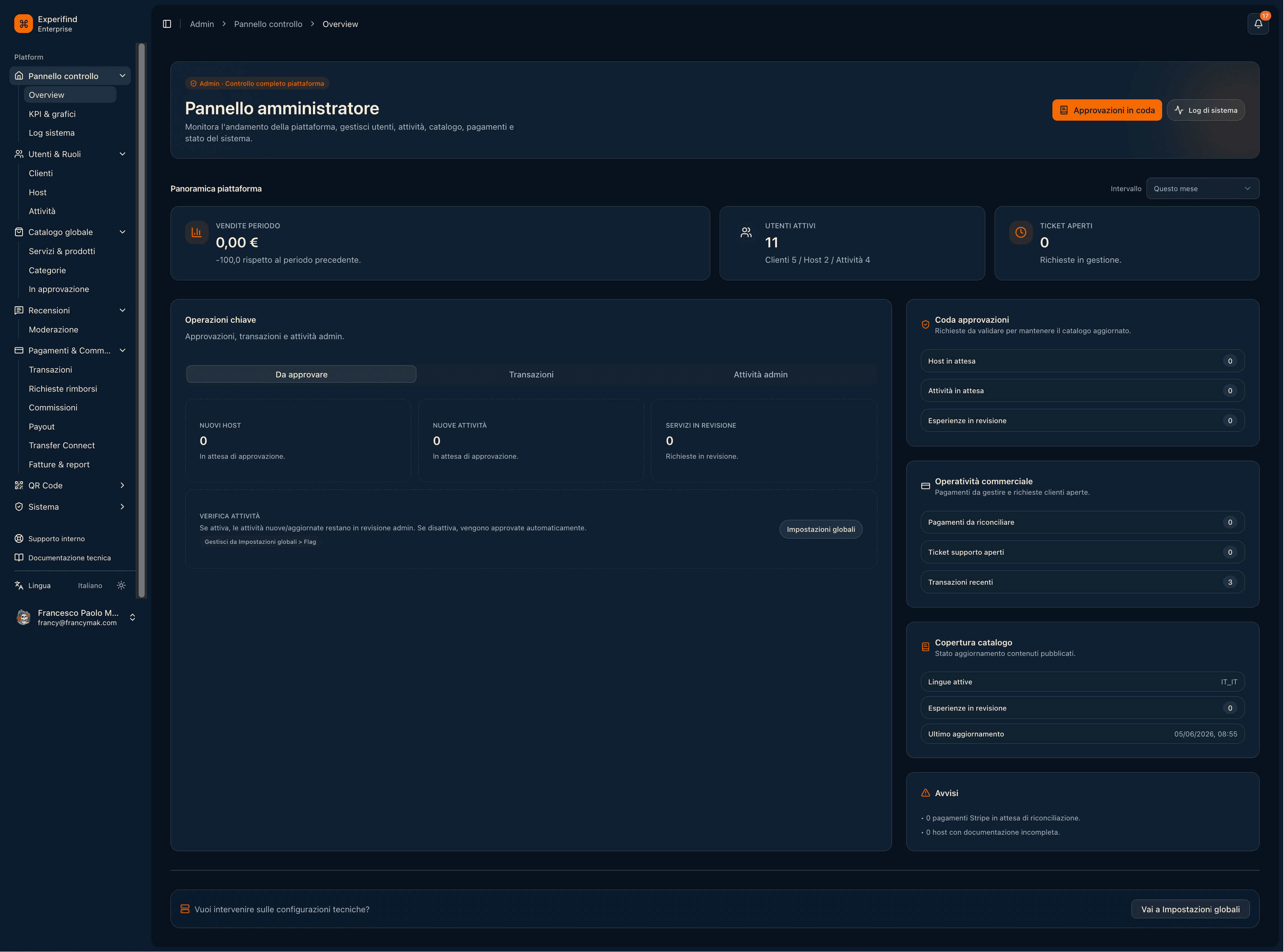
Administrator panel with platform-level cards, trend/summary area and stacked management modules.

Why: I made the layout modular so platform owners can add or remove management blocks without redesigning the whole dashboard.

Dashboard
DiveME Dashboard screenshot
Screen 1Ops

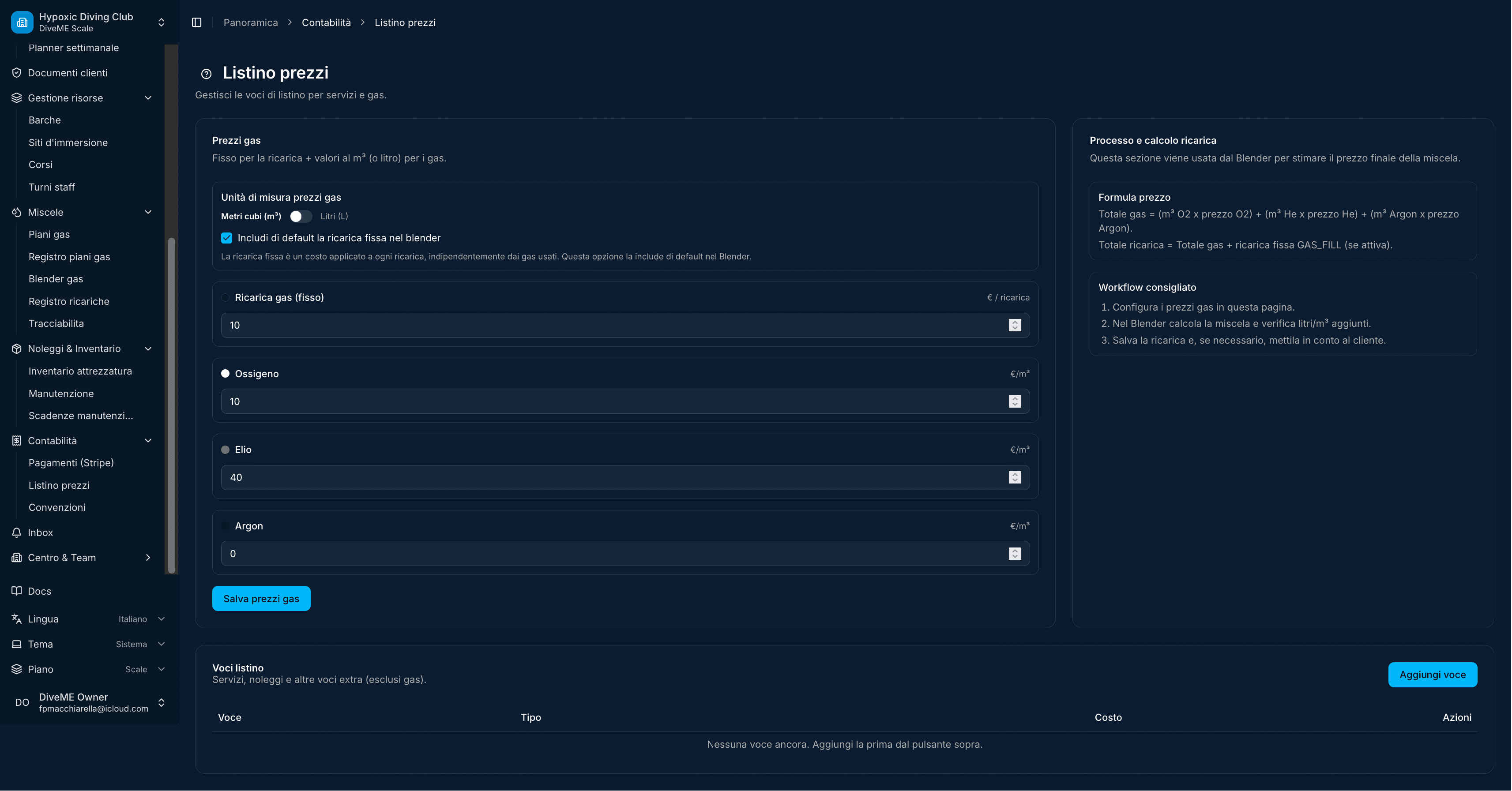
Price-list creation form with grouped fields for items, categories and pricing rules.

Why: I made the form linear and explicit because diving centers need fewer ambiguous steps when configuring paid services.

Bookings
DiveME Bookings screenshot
Screen 2Stripe

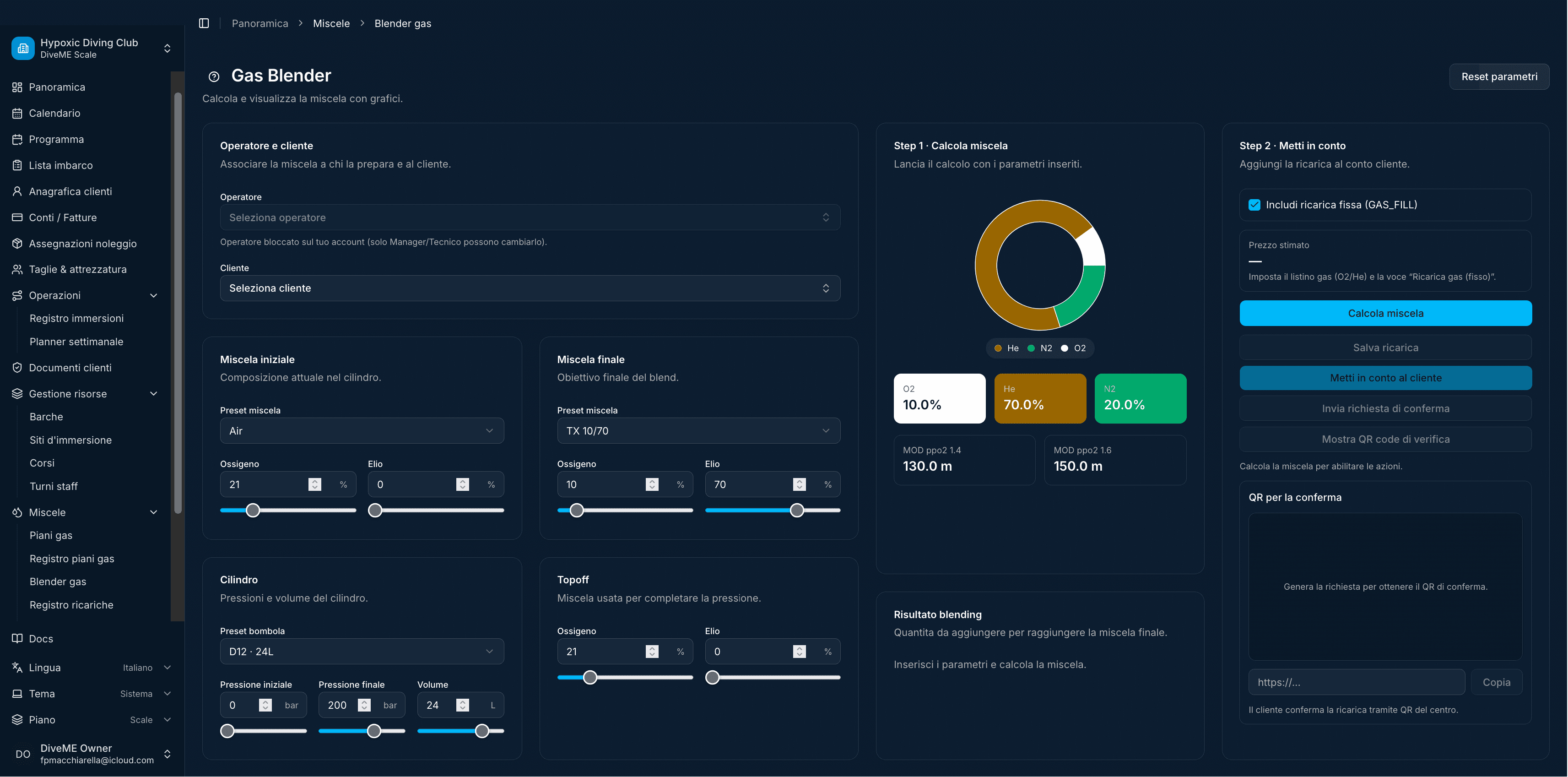
Gas-cylinder blend calculator with sliders, target values, cost panels and final mix summary.

Why: I used interactive controls and immediate totals because blend planning is numeric and benefits from quick iteration.

Calendar
DiveME Calendar screenshot
Screen 3Plan

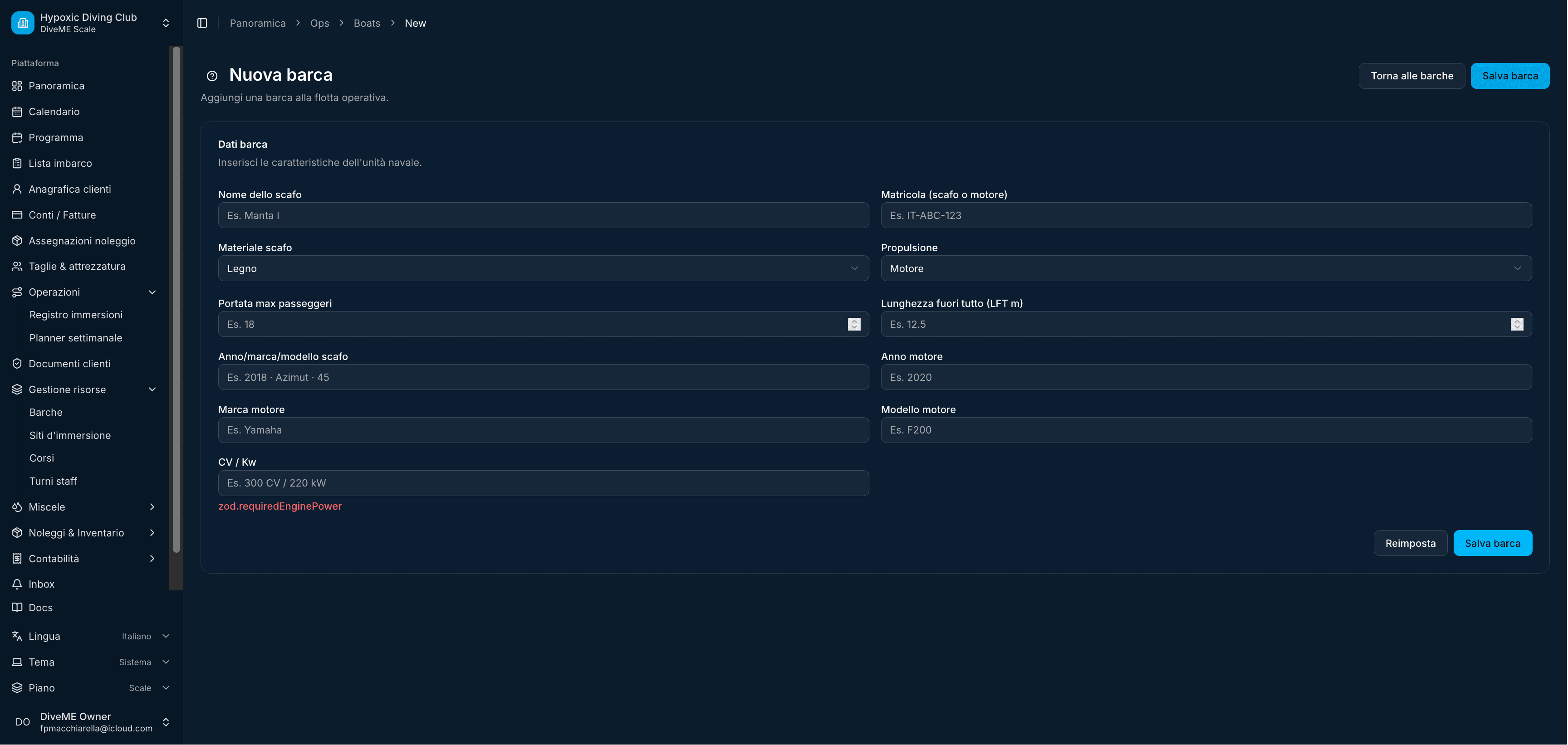
New boat form with technical fields, capacity values and operational metadata.

Why: I kept the data entry compact because staff should be able to register operational assets without leaving the admin flow.

Customers
DiveME Customers screenshot
Screen 4Roles

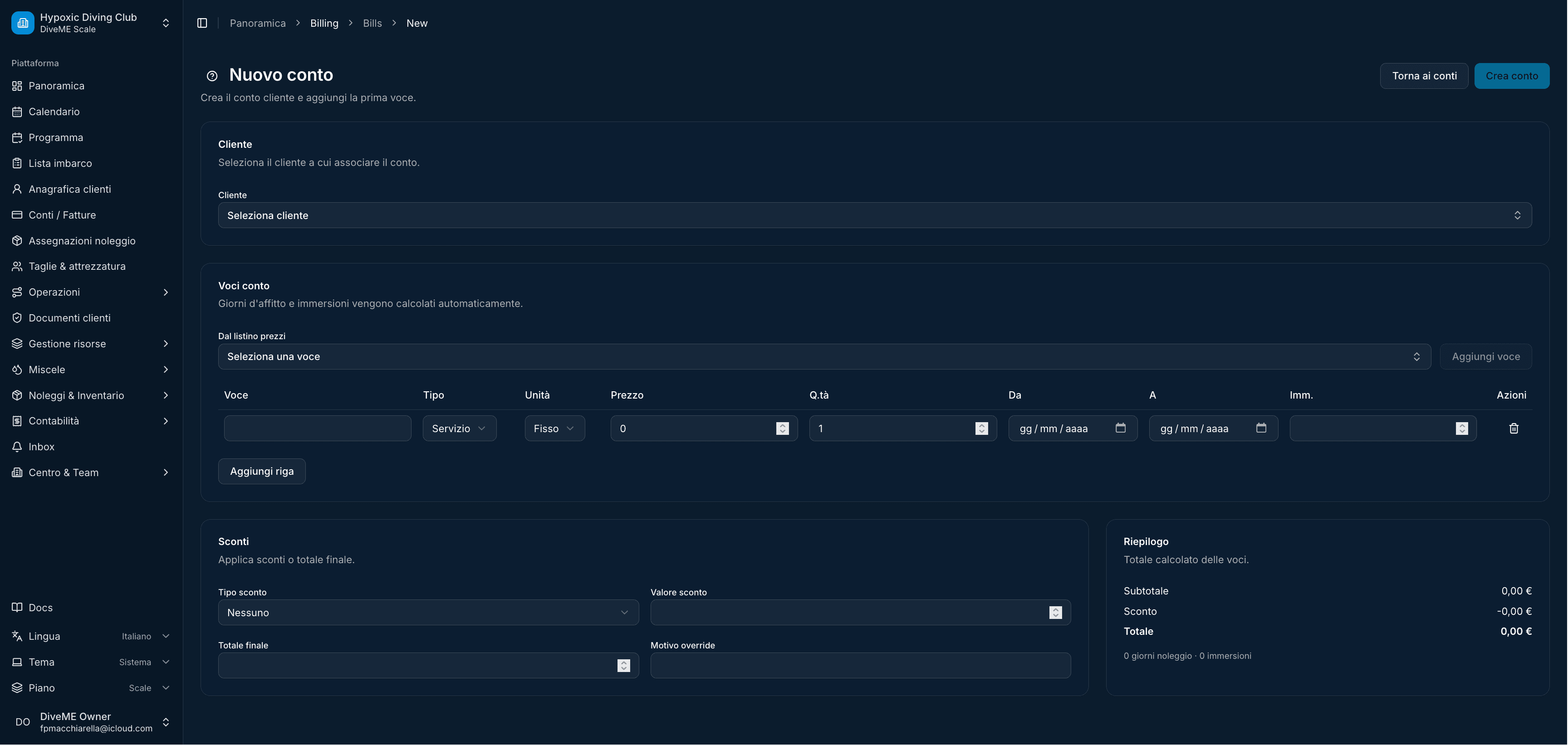
New account/customer workflow with billing, item rows and total summary.

Why: I positioned totals and line items together so staff can verify payment implications while entering the order.

Checkout
DiveME Checkout screenshot
Screen 5Pay

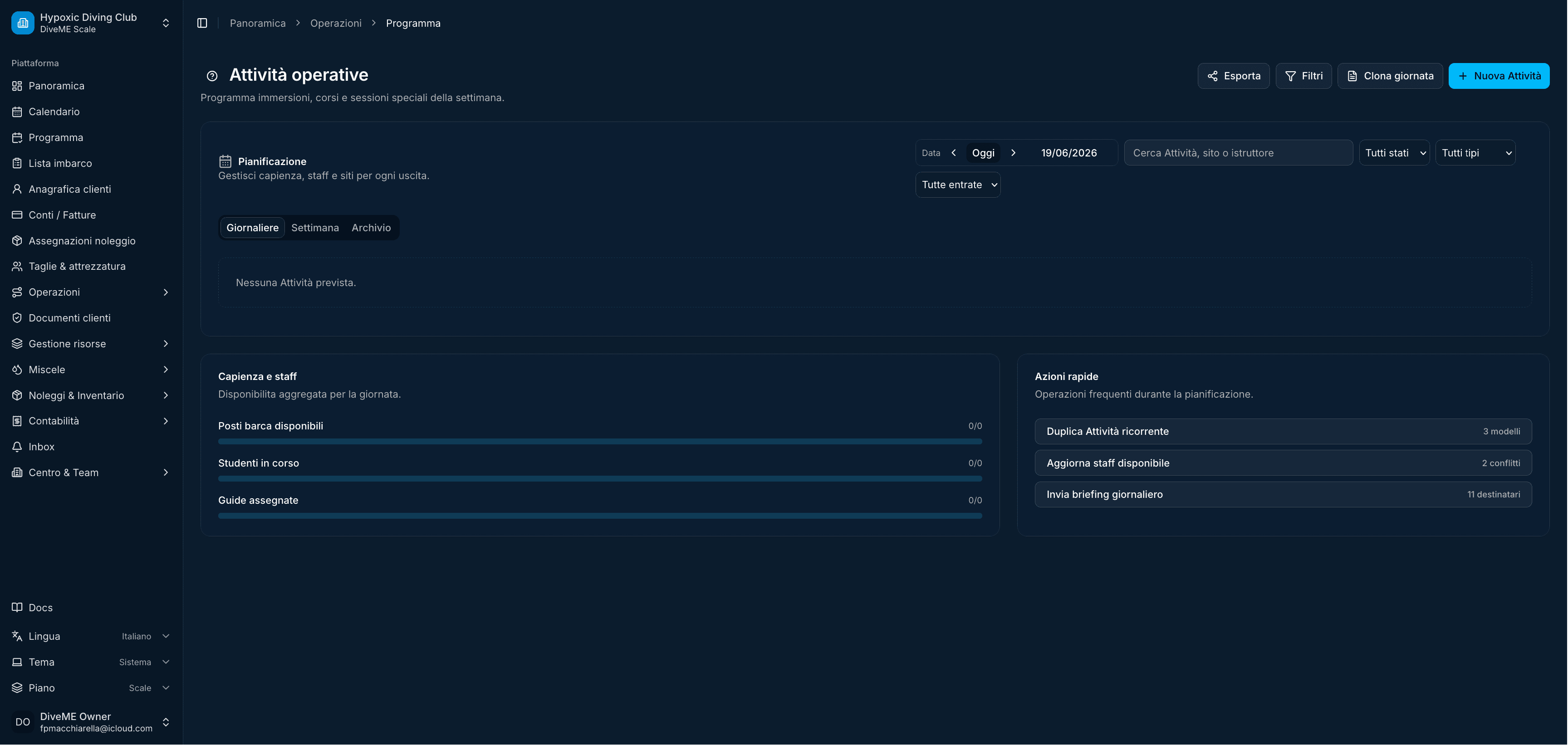
Operational activity page with participants, activity rows, filters and related side actions.

Why: I structured it around the activity because diving-center work is scheduled around events, people and equipment readiness.

Courses
DiveME Courses screenshot
Screen 6Dive

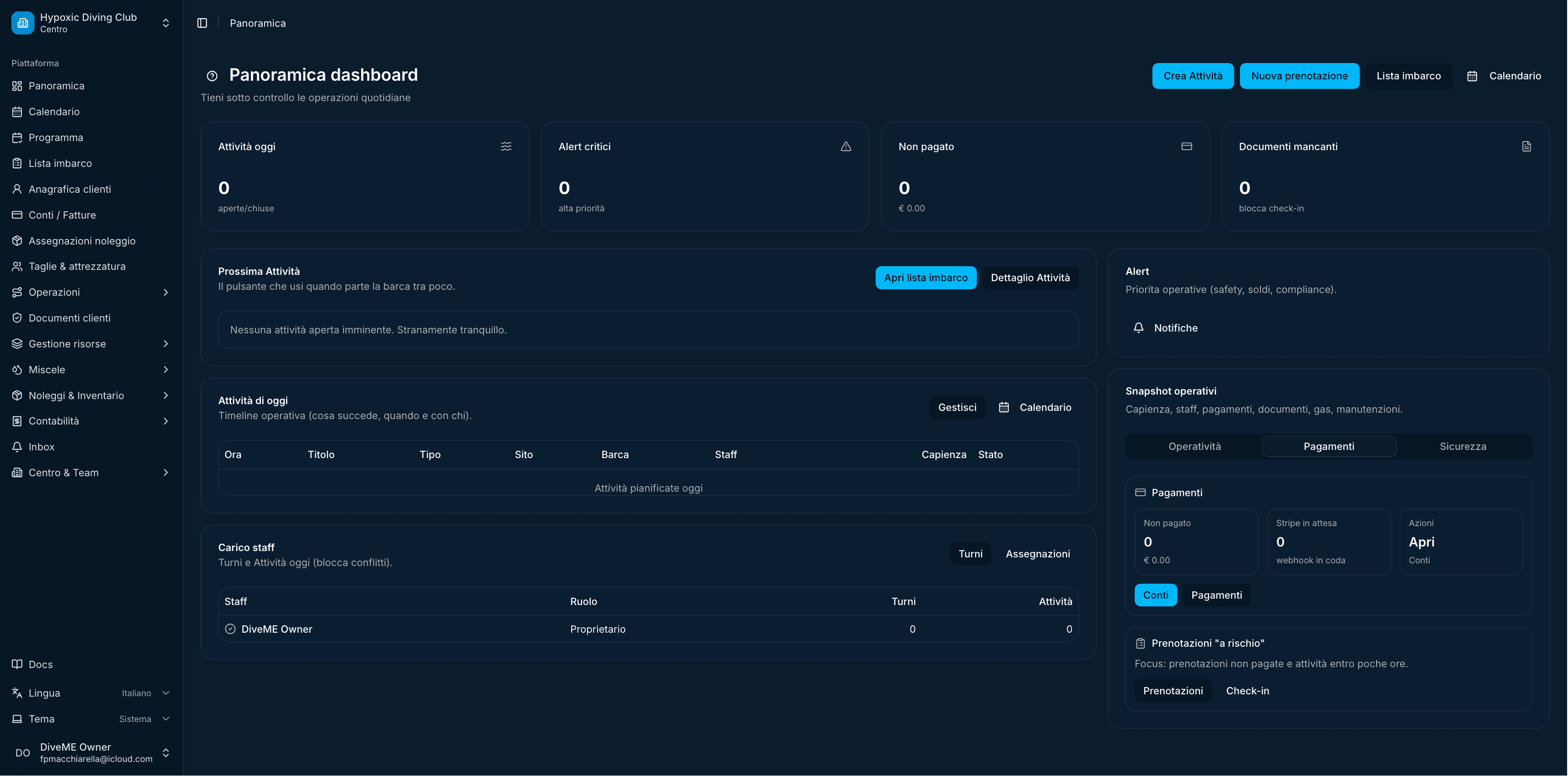
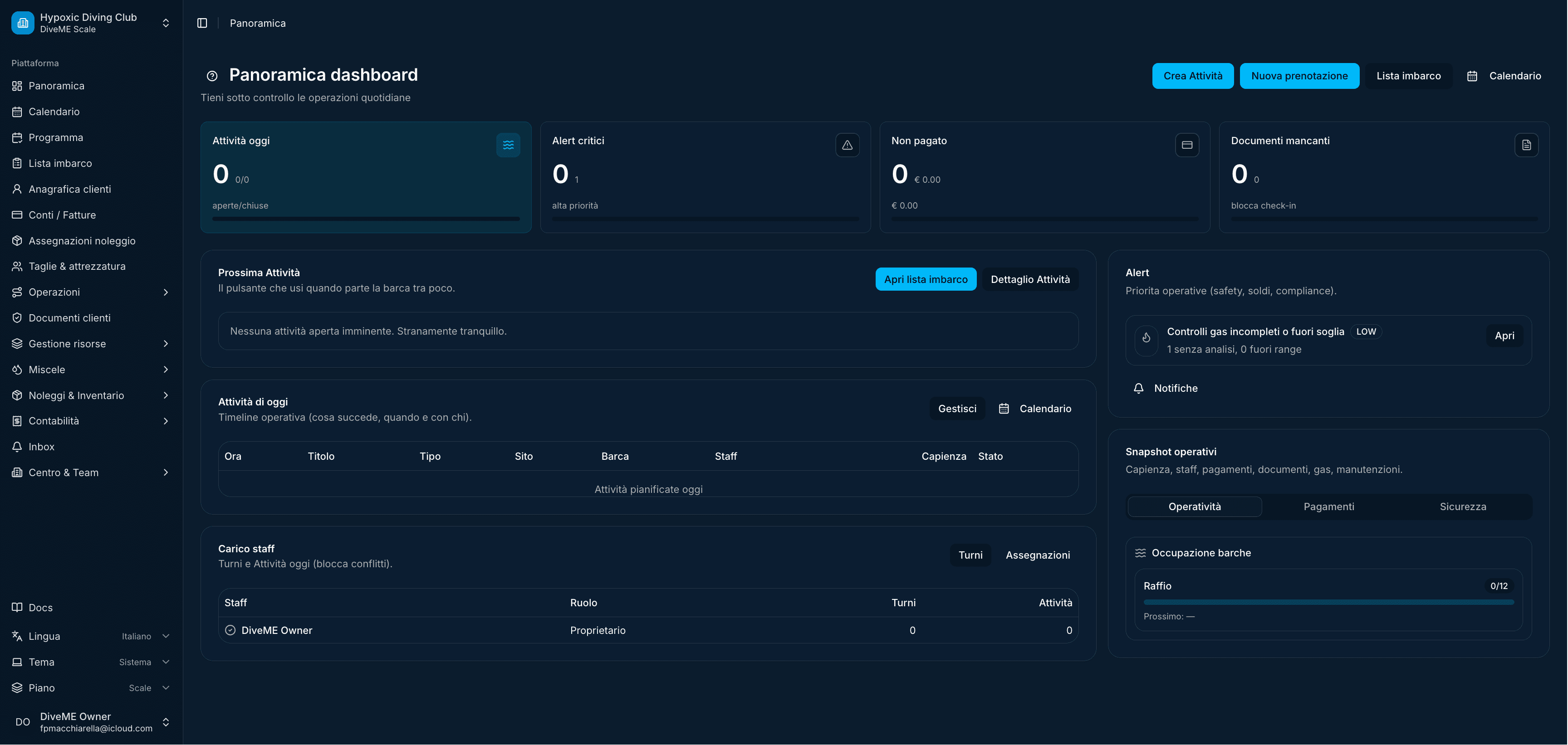
Panoramic dashboard with counters, open items, activity lists and grouped operational widgets.

Why: I gave staff a single control room view so they can see bookings, customers, payments and tasks before choosing a module.

Mobile
DiveME Mobile screenshot
Screen 7RN

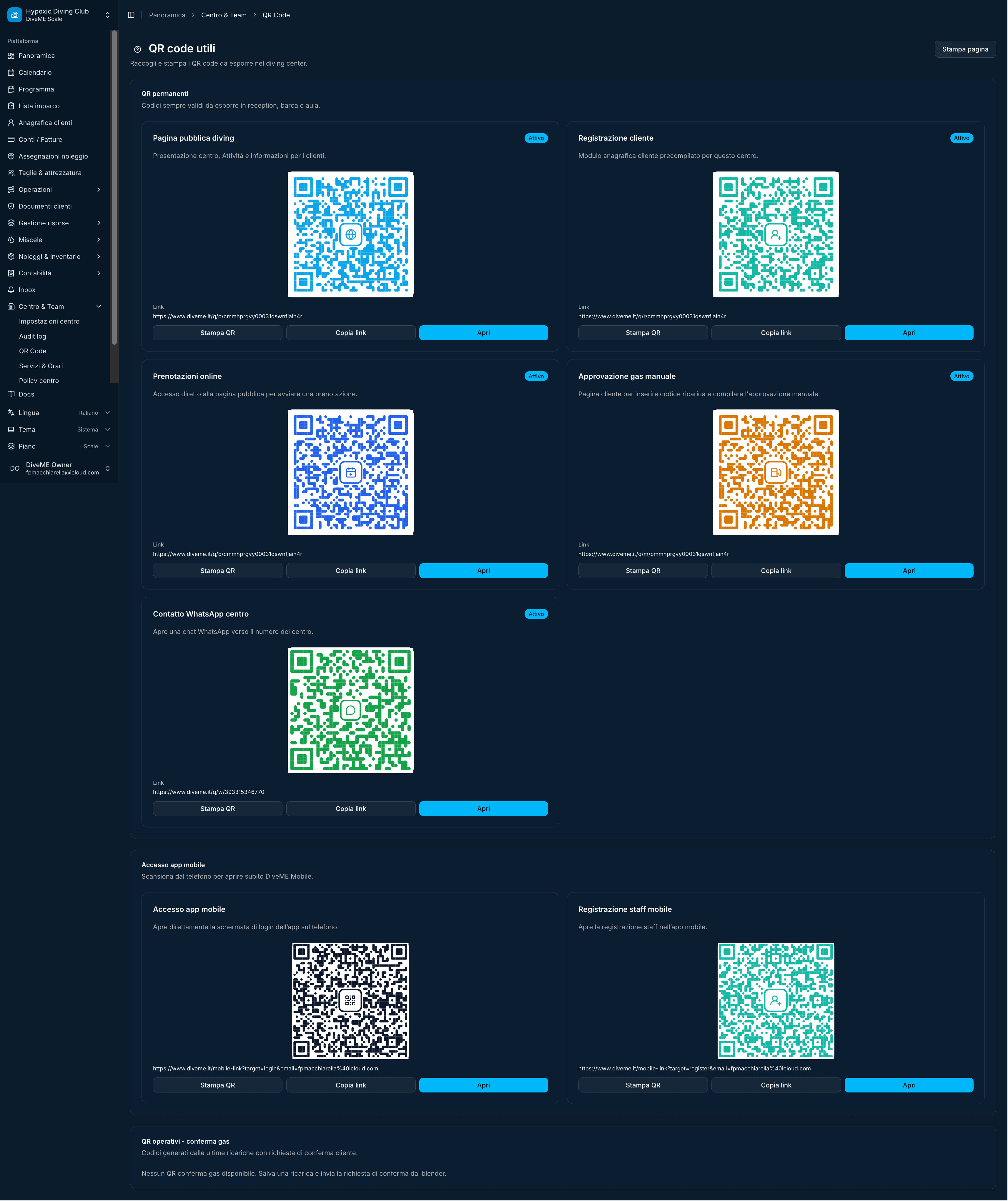
QR-code management screen with multiple generated codes grouped by use case.

Why: I made QR cards visually distinct because staff may need to print, share or identify codes quickly during daily operations.

Admin
DiveME Admin screenshot
Screen 8Staff

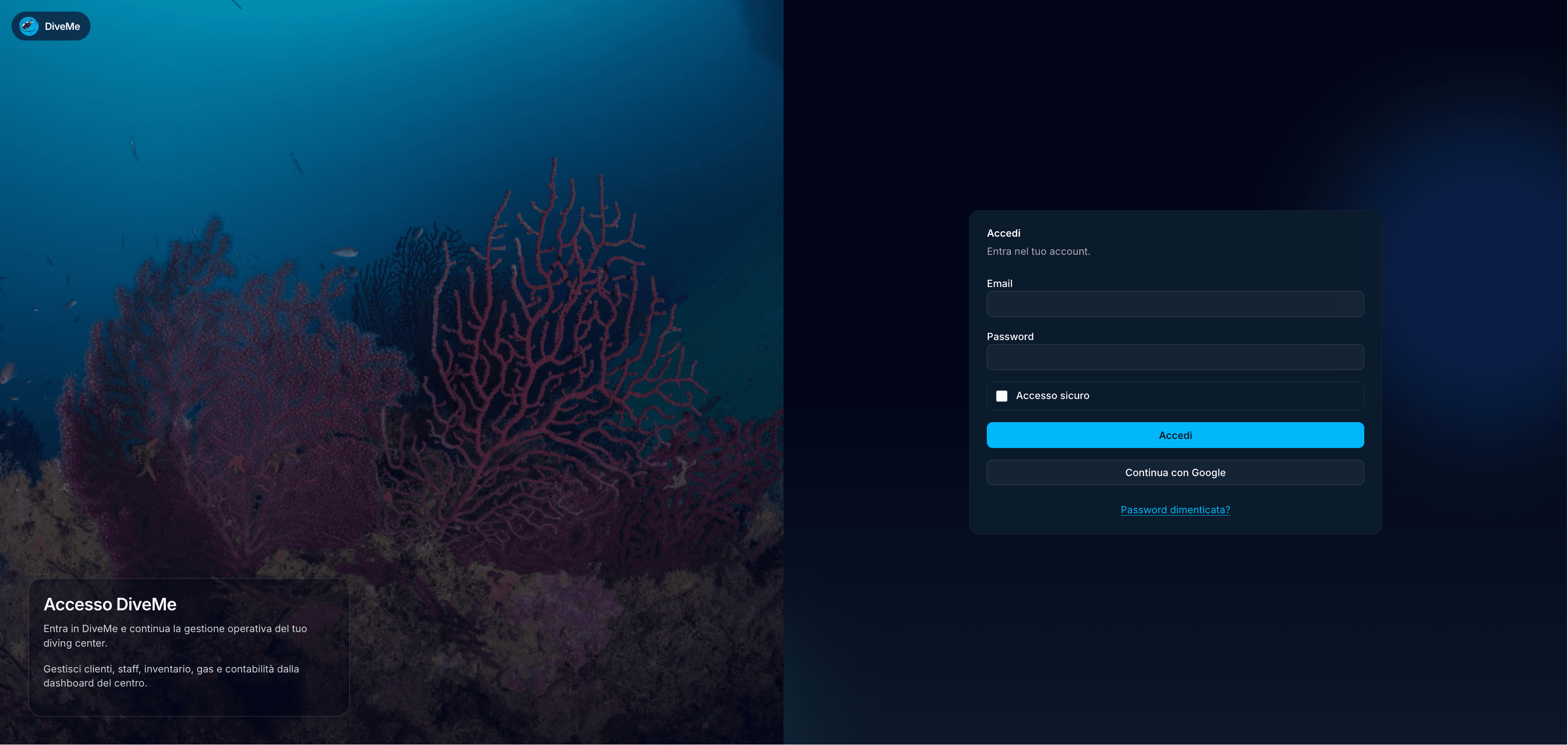
Login page with underwater visual identity, authentication panel and external sign-in option.

Why: I used a strong domain image to make the product immediately recognizable while keeping the access form focused and minimal.

Case Studies

Click a case study to open the full technical breakdown.

Tech Stack by Level

Core

Next.jsReactTypeScriptTailwind CSSPostgreSQLPrisma ORM

Advanced

Node.js APIsShadcn UIStripe IntegrationsRole-based SystemsGDPR FlowsAPI IntegrationsMonitoring & Automation

Familiar

React NativeCapacitorJSDiscord/Steam IntegrationsBattleMetrics Integrations
Core Capabilities

Product Engineering

Building full-stack products from idea to production with strong focus on UX clarity, responsive interfaces, scalable architecture, and long-term maintainability.

Next.js, React, TypeScript, Node.js

Build quality first

Platform Architecture

Designing scalable database and API structures for multi-role dashboards, real-time workflows, admin controls, and production-grade automation.

PostgreSQL, Prisma, REST API, Role-based Access

Scalable by design

AI-Ready Interfaces

Crafting interfaces for AI-assisted systems with clear controls, alert-driven workflows, and actionable analytics that support fast real-time decisions.

React, TailwindCSS, Shadcn UI, CapacitorJS

Human-centered

Payments & Subscriptions

Integrating secure billing and recurring plans into digital products with clean user flows, subscription logic, webhook handling, and reporting visibility.

Stripe, Webhooks, Node.js

Revenue-focused

Growth Features

Implementing multilingual support, tracking, social-sharing hooks, wishlist, and engagement tools to increase conversion, retention, and product discoverability.

i18n, Analytics, Email Workflows

Conversion-oriented

Operational Reliability

Applying GDPR-friendly data handling, secure backups, retention-aware storage policies, and monitoring patterns for stable day-to-day operations.

GDPR, Backups, Monitoring

Production-safe

What I Bring

Product Mindset

I design features to solve real user problems first, then shape architecture to keep delivery maintainable, measurable, and fast over time.

Reliable Delivery

I ship production-ready flows with role-based access, GDPR-aware handling, secure backups, monitoring patterns, and scalable API behavior.

Cross-Stack Execution

From UI/UX to backend logic and external integrations, I move across the full stack without losing quality, clarity, or operational stability.

Experience Snapshot

Click a role to open detailed responsibilities.

Education

UNINETTUNO

Bachelor in Computer Science and Technology

2024 - 2027

Liceo Statale Ettore Majorana

STEM-focused high school diploma

2016 - 2021

Career Timeline

Click a role to open full context and responsibilities.

Beyond Code

Flight Simulation

I practice high-fidelity flight simulation as real as it gets, including realistic IFR and VFR procedures. It trains precision, discipline, and calm decision-making under pressure.

Deep Technical Diving

I am a deep underwater explorer focused on technical dives and rebreather discipline: planning, redundancy, and calm execution in complex environments.

Wine Journey

I am studying the world of wine to refine palate, culture, and sensory attention. It keeps me curious and detail-oriented outside software.

Let's Work Together

Open to challenging Full Stack opportunities where I can combine software engineering, professional growth, and real impact. I enjoy product collaborations and long-term technical partnerships built on quality, reliability, and continuous improvement.